

Infrastructure, whether in the cloud or on-premises, sits at the heart of your technology stack. The fundamental structure and configuration of your infrastructure impacts what tech you can integrate, what transformative solutions you have access to and how you can innovate the way your organisation functions. It’s essential to implement a cloud infrastructure for AI if you want to dive in.
When organisations look to implement cutting edge technologies like AI, they often run into the roadblock of their own infrastructure. Here, we’ll explore the best approach to your cloud infrastructure and how it can lay the foundation for transformative innovation.
Where does cloud infrastructure fit in wider digital transformation initiatives?
Digital transformation today is a key pillar of all technical roadmaps and is a continuous process of change and optimisation of your operations to support your business strategy. Whether organisations are aiming to increase operational efficiency, improve customer experience, adopt AI, or unlock new revenue opportunities, the cloud often serves as the backbone for change.
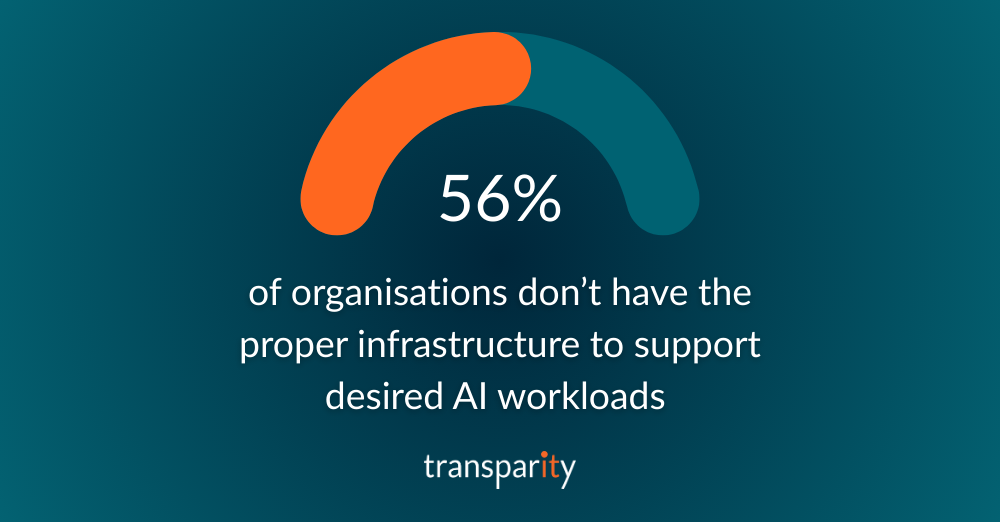
While sometimes overlooked, cloud infrastructure (like Microsoft Azure) plays a central role in enabling these efforts. According to Microsoft’s State of AI Infrastructure report, challenges with infrastructure are a common roadblock in implementing AI tools. According to the report, 56% of organisations don’t have the proper infrastructure to support desired AI workloads and 41% cite infrastructure design and implementation as the area they need most support with.
Microsoft Azure provides a comprehensive platform that supports both infrastructure modernisation and innovation. For many organisations, Azure offers the scalability, security and integration capabilities needed to modernise legacy systems, transition to more agile operating models and deliver services at scale.
How are organisations approaching the cloud?
We’re seeing a noticeable shift in how businesses approach cloud adoption. Early approaches often focused on lifting and shifting workloads to reduce costs or improve reliability. Today, the conversation is more strategic where Azure Landing Zones are configured to support organisations with their priorities, fiscal operations (FinOps), governance, security, AI and ensuring the cloud provides value for money in an increasingly cost-conscious economy.
Hybrid and multi-cloud models are common, as enterprises seek flexibility and avoid vendor lock-in. Some begin with targeted workloads such as development environments, DRaaS or DaaS; before expanding into data platforms, enterprise applications or AI workloads.
What stands out in successful approaches is clarity: clear goals, clear governance, strong security frameworks and efficient operations.
Common pitfalls in cloud infrastructure for AI
While the benefits of cloud are well understood, there are also recurring challenges that can undermine success in cloud infrastructure for AI:
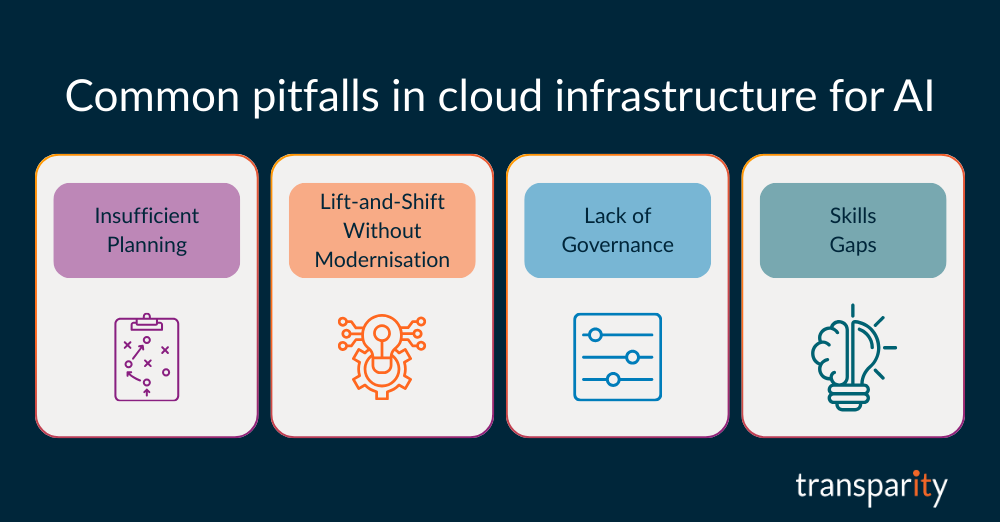
Insufficient planning
Moving to the cloud without a well-defined strategy often results in higher costs, technical debt, data loss and unnecessary disruption/impact.
Lift-and-shift without modernisation
Replicating legacy architectures in the cloud can cause unexpected challenges like limited performance, increased costs, conceal existing security gaps and limit future modernisation opportunities.
Lack of governance
Without controls around cost management, identity, regulation, security, and application services, cloud environments can quickly become “runaway trains” – becoming difficult to manage, resulting in disrupted business operations and higher running costs.
Skills gaps
Cloud success requires new capabilities both technical and operational – that many teams are still developing.
These pitfalls are avoidable with the right planning, expertise, and support.
Key considerations for businesses moving to the cloud
A successful cloud journey requires more than technology decisions. It involves aligning people, process, and priorities.
Here are a few guiding principles:
Start with a clear strategy
Define objectives in business requirements, security objectives, and financial constraints, which will help define clear technological solutions for those objectives.
Modernise, not just migrate
Take the opportunity to rethink how applications and services are designed and delivered, which may offer greater scalability or business continuity.
Build internal capability
Invest in training, FinOps and change management to bring teams along the journey.
Prioritise security and compliance
Establish frameworks early to ensure data governance and regulatory alignment.
A structured, phased approach typically yields better outcomes than migrations without clear direction.
Microsoft Azure’s role in supporting AI adoption
As interest in AI continues to grow, Azure provides a practical, secure path to integration. Through services like Azure OpenAI, Azure Machine Learning, and Cognitive Services, organisations can begin incorporating AI into their operations, whether to enhance customer facing services, granular data analysis or automate internal workflows, all which can be done at scale.
Importantly, Azure supports responsible AI development, with governance tools and model transparency built in. For businesses exploring AI, the platform offers both the infrastructure and the tools to pilot, scale, and manage AI initiatives within the boundaries of corporate and regulatory requirements.
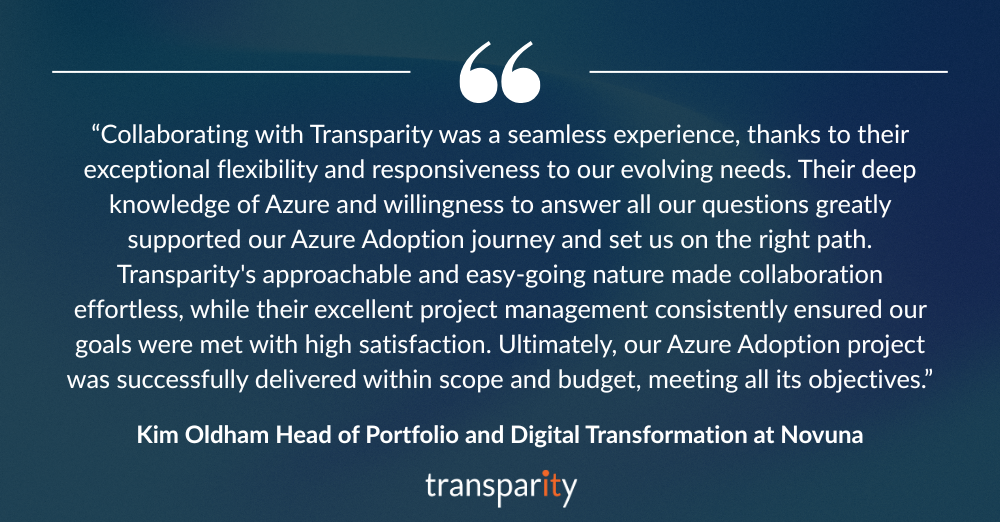
Building a Future-Ready Financial Services Cloud: Novuna’s Azure Adoption – check it out here.
Taking the next steps and getting started
For organisations looking to move forward with Microsoft Azure and the broader cloud journey, a few initial steps can make a significant difference:
- Conduct a cloud readiness or application assessment
- Engage with a trusted partner to accelerate planning and execution
- Leverage Microsoft programs and frameworks to support the transition
- Deliver outstanding solutions and adopt cloud technology.