



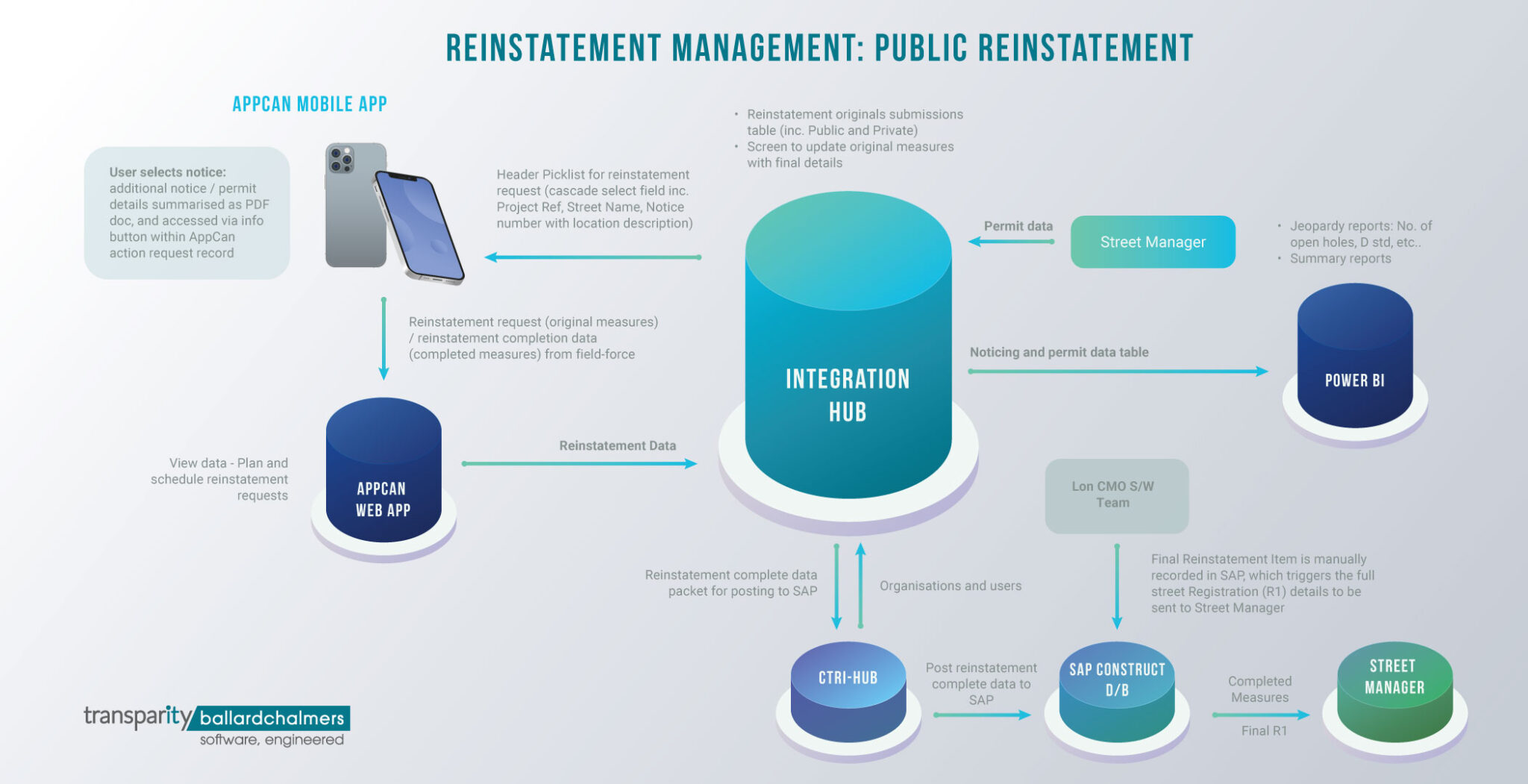
The Integration Hub is a collection of Azure services and is hosted in AppCan’s Azure tenancy. There are a number of integrations between the integration hub and the AppCan platform. These are:
Other outside integrations included in the hub are:
Other parts of the application include:
Web UI Application
As part of the integration hub, a Web UI application was developed to support any manual interaction with the data held in the integration hub. This application has the following functions:
It was implemented as an Angular SPA (single page application) for the UI, with a .NET Web API backend.
By partnering with AppCan and by extension Transparity, this client was able to unshackle itself from a large and expensive system that didn’t do exactly what was needed. Now it’s been replaced with something that is totally within its control to change, meaning no wait time or punitive costs. So, year on year, the client is better off with both the benefits of the changes and a significant reduction in annual running costs.
With gas networks across the North West, East Midlands, East of England and North London all now using the Integration Hub after only a few months since go-live, the project has been a great success. In an interesting aside, once the development budget and timescales had been established by Transparity, there was an initial challenge, from the client, that the project, given its scale and complexity, could not be delivered on time and on budget. Both confidence and reputation soared when both targets were met!
The development of the integration hub took 6 months and £125,000 to build and currently ticks along at less than £10,000 a year in Azure and support costs. One year of cost savings, achieved by leaving Salesforce, paid for the project, and the client is now accruing year-on-year savings for the remainder of the contract term.
Additionally, the company is using four partitions of the Hub across four geographical areas, meaning they’ve now internally spread the initial £125,000 investment across four cost centres. There is no other product on the market that can compete with that.
The key point is does it work – yes! It is already deployed across three businesses and four geographies since the product launched in July. To date, the hub has received, validated, and processed in excess of 400,000 field-force transactions, across three different engineering processes.
Here we give just one example of how the system is used.
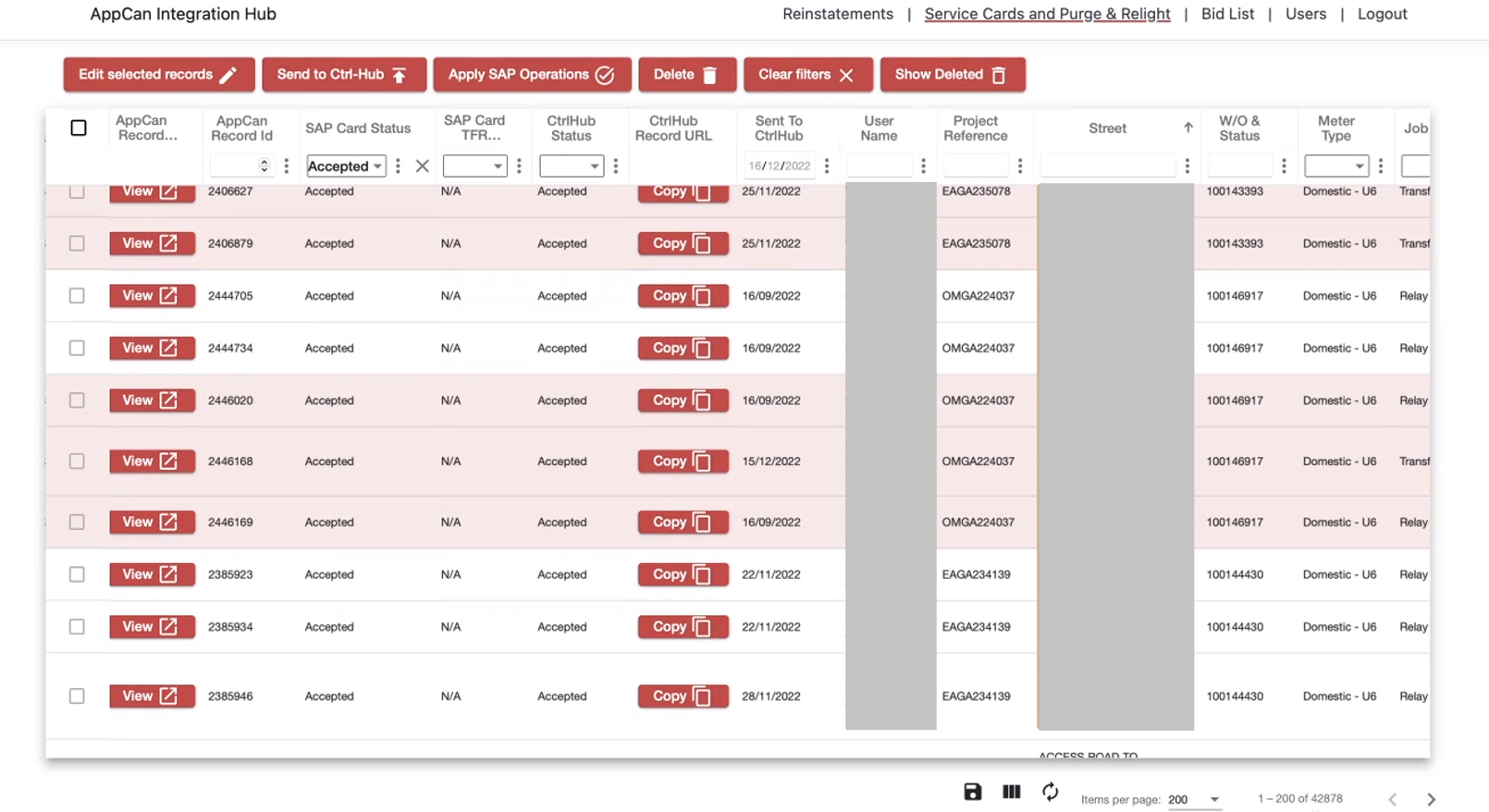
The OFGEM (Office of Gas and Electricity Markets) pays money to the client based on how many domestic/non-domestic gas services they replace. Each white row is associated with one or more pink rows and each processed white row attracts an OFGEM payment.
Looking at how that translates into money for the client, we have to consider what has been accepted. Since August there have been over 75,000 accepted service cards across all four regions; at circa £500 per card, around £38m of transaction value!
Additionally, reporting ability, via access to the integration hub tables using Power BI, has dramatically improved; the client’s internal team of analysts can now deliver comprehensive dashboard summaries that track process performance.
The client has full control of the AppCan mobile platform and integration hub too, meaning that outsourced development, tweaks, or consultancy is not a constant requirement and features are able to be added internally if required.
For AppCan’s Client, this is a significant departure from the use of large legacy CRM systems which are expensive to implement, run, and make changes to. Effectively we have delivered a high-quality works management system UI, without any of the attendant costs of larger mainstream products.
The Integration Hub is a great addition to the main portfolio of AppCan Web and AppCan Mobile. After the initial build for one client, further clients have already picked it up, seeing the huge value add.