Following Microsoft’s success in the integration space over the last two decades with BizTalk, cloud integration was the natural next step. After a couple of false starts on the Azure Integration approach, over the past few years, Microsoft has gathered a group of experienced and knowledgeable integration experts who have given direction to what was a haphazard initial approach and we now have Azure Integration Services.
With the growing functionality that Azure Integration Services provides us with and with more companies adopting a cloud-first approach to their IT Architecture, this leaves the question: How do companies who have invested millions in their integration systems built on BizTalk move to the cloud?
ON-PREMISES BIZTALK INTEGRATION TO AZURE INTEGRATION SERVICES
Azure Integration Services mainly consists of API Management, Logic Apps, Functions, Service Bus and Event Grid and as of September 2020 is a leader in Gartner’s Magic Quadrant for Enterprise Integration Platform as a Service.
For the purposes of this blog, we’re assuming here that the cloud is specifically Azure Integration Services. There are, of course, other options that companies can consider, like adopting another cloud provider and/or cloud integration system like AWS/Mulesoft. However, to simplify things here, we will just consider the options for moving on-premises BizTalk Integration systems to Azure Integration Services (AIS).
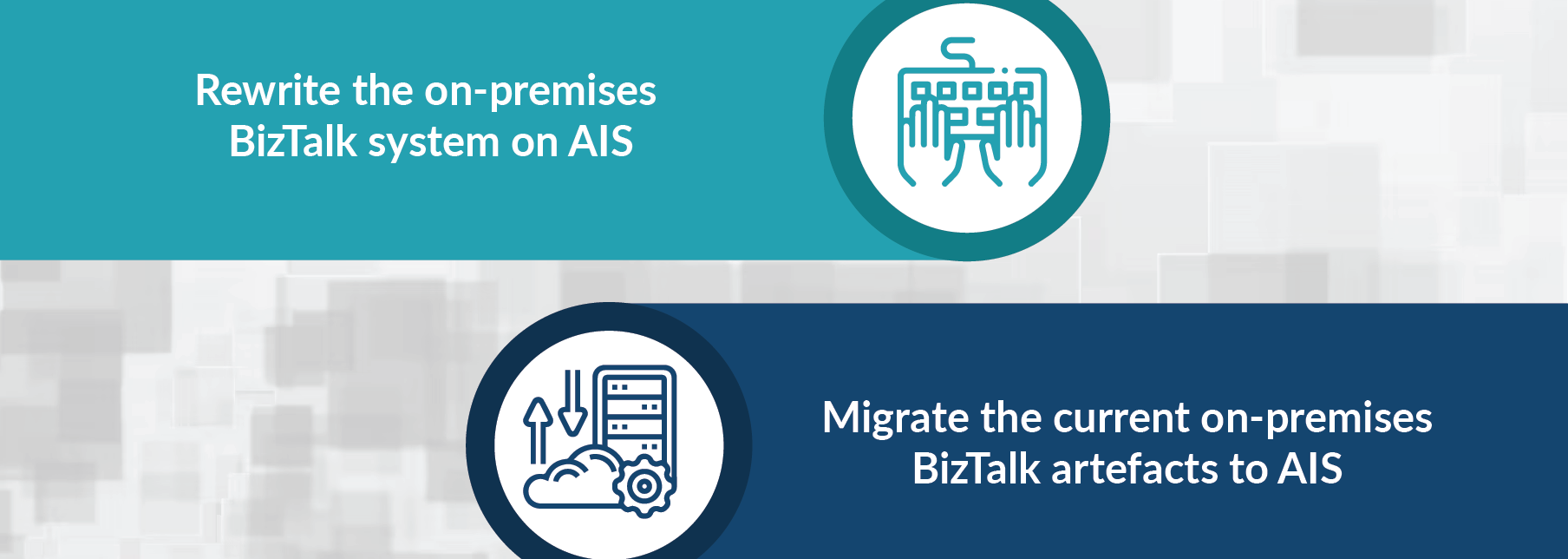
Broadly speaking there are 2 main options:
REWRITE THE ON-PREMISES BIZTALK SYSTEM ON AZURE INTEGRATION SERVICES
This first option may seem drastic and expensive but the alternatives themselves are not always as easy as they first seem. The advantages of writing from scratch are that you don’t bring forward bad practices from years of different developers’ styles, and you can more easily manage the cloud development from day one.
The whole on-premises integration system doesn’t have to all be written at once. A hybrid approach can be adopted by migrating those interfaces that need changing to AIS. Both BizTalk 2020 and AIS provide the means to exchange data between on-premises and Azure.
If, however it is dictated to move away from on-premises in a timescale that doesn’t meet with a hybrid approach and if a complete rewrite would be too time-consuming and costly the second option below can be considered.
MIGRATE THE CURRENT ON-PREMISES BIZTALK ARTEFACTS TO AZURE INTEGRATION SERVICES
 Until June 2020, when it was announced at the annual Integration Summit that Microsoft was producing a free open-source command-line BizTalk Migration tool (released in October 2020), you were limited in what BizTalk artefacts you could migrate. The only BizTalk artefacts you could migrate were your transformations or Maps (as they are known in BizTalk) and Schemas. The other two BizTalk artefacts Pipelines and Orchestrations you had to rewrite in AIS.
Microsoft state that with the BizTalk Migrator you can do faster migrations and follow best practices. It covers both messaging and orchestration workflows and is open-source so you can amend it to suit your solutions.
One word of caution here, BizTalk is a massive product, and the BizTalk Migration tool is in its infancy with a limited feature set currently. As more people use it and contribute to the feature set it will become a much more useful migration tool.
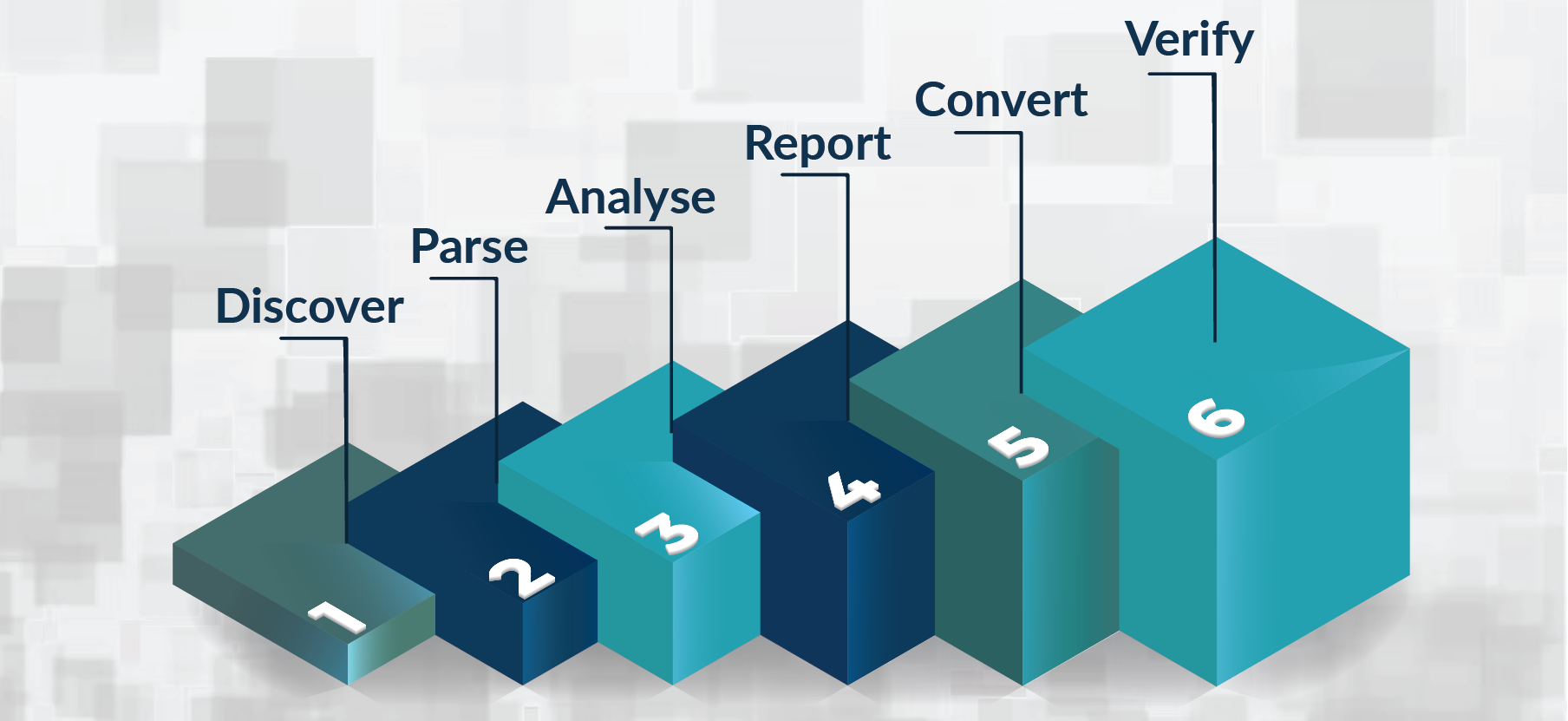
There are six stages to the BizTalk Migration tool, Discover, Parse, Analyse, Report, Convert and Verify. The first four stages are used to provide an analysis report of what your solutions could look like on Azure and also what the BizTalk Migration tool does not currently do. The source code is open source and available on GitHub and Microsoft encourages you to extend the tool to cover your own features.
Even with this limited feature set, having run the BizTalk Migrator through some of our solutions, it does provide a lot of useful code and scripts that you can use, that you would have had to write from scratch. It also gives an insight into how Microsoft would design your solution on Azure.
THE FUTURE OF BIZTALK
 This does leave the unanswered question: If Microsoft is so keen for you to migrate from an on-premises BizTalk platform to Azure and provide you with the tools to do this quickly and cost-effectively then what future does that pose for BizTalk?
We have talked to some clients about what their migration strategies are for moving their BizTalk on-premises integration platforms to AIS and they have said they do not have a cloud strategy and plan to remain on-premises.
However, if BizTalk 2020 ends up being the last version, then based on the 10-year life cycle support approach Microsoft adopts for their products, time is ticking for those companies who choose not to migrate. You don’t have to migrate, but running critical production systems on unsupported software is not a sensible approach – although we do know someone still on BizTalk 2006!
However, recently Kovai released a new version of their BizTalk360 tool which makes it easier to maintain and operate BizTalk. The new version has been completely rewritten on the basis, as quoted by CEO Saravana Kumar, that BizTalk will still be with us for another 10-15 years.
I think we will still see a supported version of BizTalk for many years to come, Microsoft does not have a reputation of leaving their loyal customers high and dry. Having said that, it wouldn’t be too soon for companies to seriously consider migrating to Azure as there are many other benefits the cloud has to offer.
TRANSPARITY INTEGRATION – CLOUD AND ON-PREMISES
We are one of a handful of BizTalk experts in the UK and accredited Gold Microsoft Partners in the Cloud Platform, so whether you need help maintaining or modernising your BizTalk integration system or would like to take the leap to the cloud with Azure Integration Services, we are able to help.
Over the holiday period, FireEye security published this post with additional technical details on the Sunburst attack. This analysis is verbose and shows additional defence evasion technique. This new information further proves the sophistication of this attack.
If you are using Azure Sentinel then new analytic rules are available to detect the post-breach behaviour. We recommend enabling these straightaway if you have not done so already.
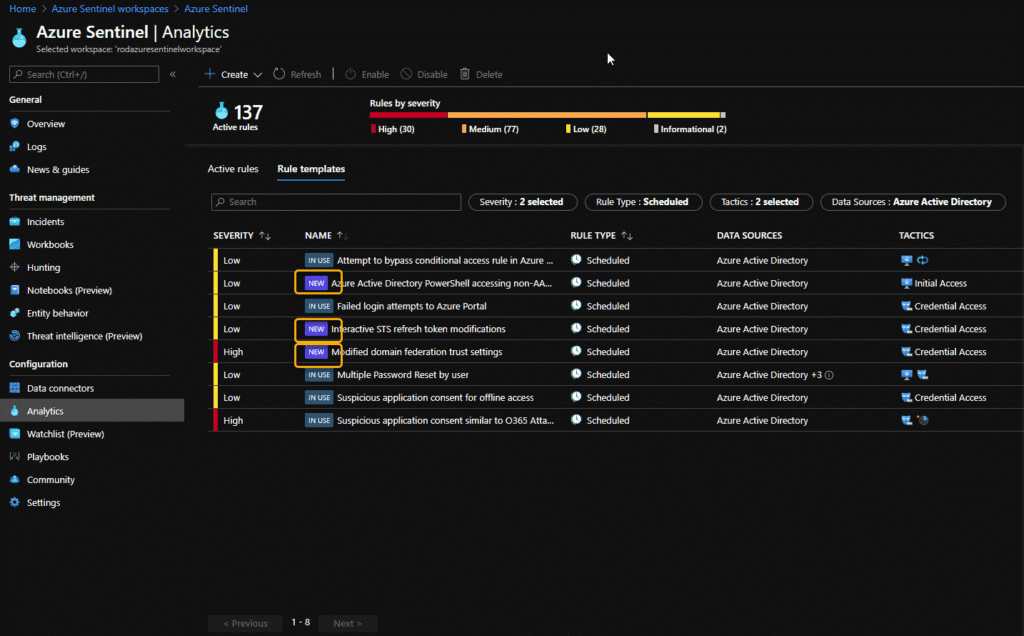
If you are not running Azure Sentinel then we advise that you download and run the recently released Sparrow PowerShell script created by CISA’s Cloud Forensics Team here.
This tool will help detect possible compromised accounts and applications in the Azure/Microsoft 365 environment.
Transparity Security Analysts have been regularly reviewing the details regarding the Nation-State based attack against SolarWinds (known as either Sunburst or Solorigate). This attack is likely to affect your organisation in one way or another, so please take the time to review the information below.
Please note that Transparity do not use SolarWinds Orion; this post is for awareness only.
You may not be running SolarWinds Orion, so therefore will be currently unaffected. However, it is still recommended that you take the time to review the below information, as organisations you interact within your own supply chain may be using affected SolarWinds’ products. Please be diligent when opening emails and files that originated outside of your organisation.
For our customers utilising Transparity’s Datto RMM service, we are instigating an in-memory scan on all Windows-based devices to check for executables which show signs of infection. Customers will be contacted after the scan if there is any sign of infection.
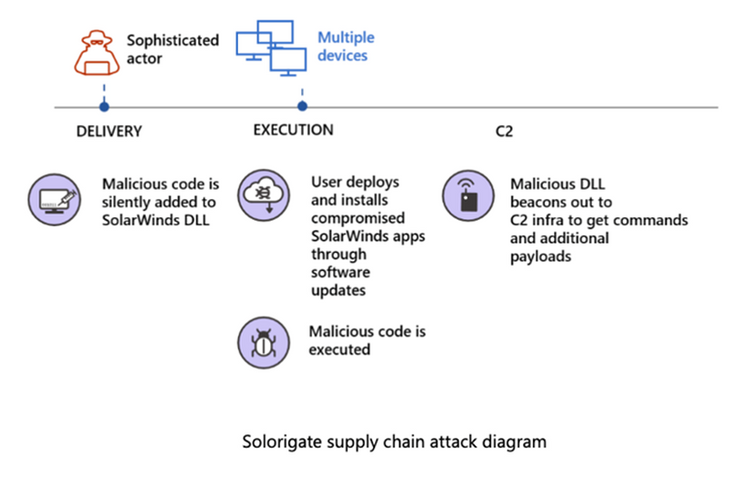
On 13th of December 2020, security firm FireEye discovered a supply chain breach in the SolarWinds Orion platform whilst investigating their own breach. This supply chain breach is one of the most sophisticated attacks ever executed. It has been performed by a Nation-State group of hackers, thought to originate from Russia. These attackers are highly motivated and agile. This attack needs to be taken very seriously. More details on the attack can be found below.
If you are concerned that you have been affected and would like to speak to our team of experts about remedial work, please email us at hello@transparity.bumblebeeitsolutions.com.
 Microsoft Cloud specialists Transparity are pleased to share that they have been named as a supplier on Crown Commercial Service’s G-Cloud 12 framework.
Crown Commercial Service (CCS) supports the Public Sector in achieving maximum commercial value when procuring common goods and services. In 2019/20, CCS helped the Public Sector to achieve commercial benefits worth over £1bn, supporting world-class public services that offer best value for taxpayers.
Transparity have been successful in qualifying for both the “Cloud Software” and “Cloud Support” elements of the framework. This will enable the Microsoft Gold Partner to offer CSP services, consultancy services and packaged workshops for a number of Microsoft Cloud solutions, including Azure, Modern Work & Security, Business Applications, and Training and Adoption services.
Public Sector organisations who require their suppliers to be on this professional scheme can now use the government’s Digital Marketplace portal to examine the solutions that Transparity offer, and invite them to tender for projects.
Tim Hannibal, Chief Partner Officer at Transparity, said: “It’s important to us at Transparity to differentiate ourselves within the market. We are one of a small handful of Microsoft Partners in the UK with 12 Gold accreditations, and the stringent checks that go into acceptance on the G-Cloud 12 framework will give customers additional confidence that we are able consult on, recommend and deliver solutions for a variety of Microsoft Cloud projects to the very highest standard.”
 UK-based Transparity Solutions Limited has secured funding from Beech Tree Private Equity (BTPE) to accelerate its business growth plans in addition to the impressive organic growth already achieved since 2015, ensuring they sustain their place as a leading Microsoft partner in the UK.
Transparity currently employ 60 staff across the UK and plan to grow to 200 in the next three years, focusing on continued organic growth and strategic acquisitions to widen its reach in providing Microsoft Technologies to its customers.
Incorporated nearly six years ago, the business was started with a completely different culture in the tech industry; one that puts its staff, customers and partners first and before profits, being transparent, and ensuring growth is delivered through strong relationships built on trust.
This has delivered more than 60% year-on-year organic growth since inception and will only be strengthened by these future plans. Their sixth financial year is on target to deliver £13m turnover (growing from £7.9m despite COVID-19) and the following year is expected to be £21m turnover, all delivered through organic growth.
Today the business focuses on Microsoft Cloud, with expertise in areas such as Microsoft 365 and Azure services. With an impressive 12 Gold Competencies and the status of being a direct CSP provider, customer success and support is ensured from beginning to end.
There will be no deviation from its heritage, with the company only working with the Microsoft platform. However additional services in Security, Dynamics 365, Business Applications and Teams Enterprise Voice will see investment to strengthen the existing portfolio.
David Jobbins (CEO, Transparity) said: “In today’s evolving environment, our customers need us and the tools we specialise in more than ever, supporting organisations through COVID and beyond in a sustainable way is essential for us to focus on.
“Since starting the business six years ago, we have been focused on becoming the most highly-skilled and best Microsoft partner in the UK. Today, I am proud to say that our incredible team have achieved this, and the investment and partnership with BTPE cements our position firmly for the future. It will be my core responsibility to ensure that the unique culture we have built in Transparity does not change and is only strengthened moving forward.
“This is excellent news for the team at Transparity and for future opportunities inside the business, fantastic news for our customers and the services we will enhance. It is also excellent news for Microsoft and will deepen our partnership with them.”
Adam Rudd (Beech Tree) said: “We have been seeking to work with Transparity for two years, and I am very pleased to join in with today’s announcement on this excellent news. We have been looking for a suitable partner to support the growth in the Microsoft Cloud space, and Transparity stood out with an incredible team that is loved and respected by its customers and Microsoft alike. We believe that Transparity is a fantastic platform which we can add to with strategic acquisitions to help the business grow its capabilities even further.
“This partnership cements two great teams coming together and creates a fantastic market opportunity to grow an incredible business focused on Microsoft technologies, whilst continuing to build on what already sets Transparity apart from the crowd.”
James Chadwick (GM UK Partners, Microsoft) said: “Transparity’s focus on driving valuable outcomes through a combination of investing in deep skillsets and strong partnerships sets it up for delivering significant impact for our mutual customers.
“I would like to congratulate Transparity on the news of this latest agreement, which further demonstrates its commitment to accelerating digital outcomes and business value across the breadth of Microsoft capabilities and services.
“As we continue our partnership with Transparity, the team’s energy for innovation continues to grow. I am looking forward to seeing the progress we continue to make together.”
– END –
Press enquiries to:
Ella Jennings
ella.jennings@transparity.bumblebeeitsolutions.com
In this blog we take a look at what makes up Azure Integration Services, its history with BizTalk Server, our work in integration and the Ballard Chalmers’ Data Integration Hub Framework.
THE HISTORY OF AZURE INTEGRATION SERVICES
Azure Integration Services is the latest Microsoft Azure toolset for creating data integrations between IT systems. It replaces Biztalk Server which has existed since 2000.
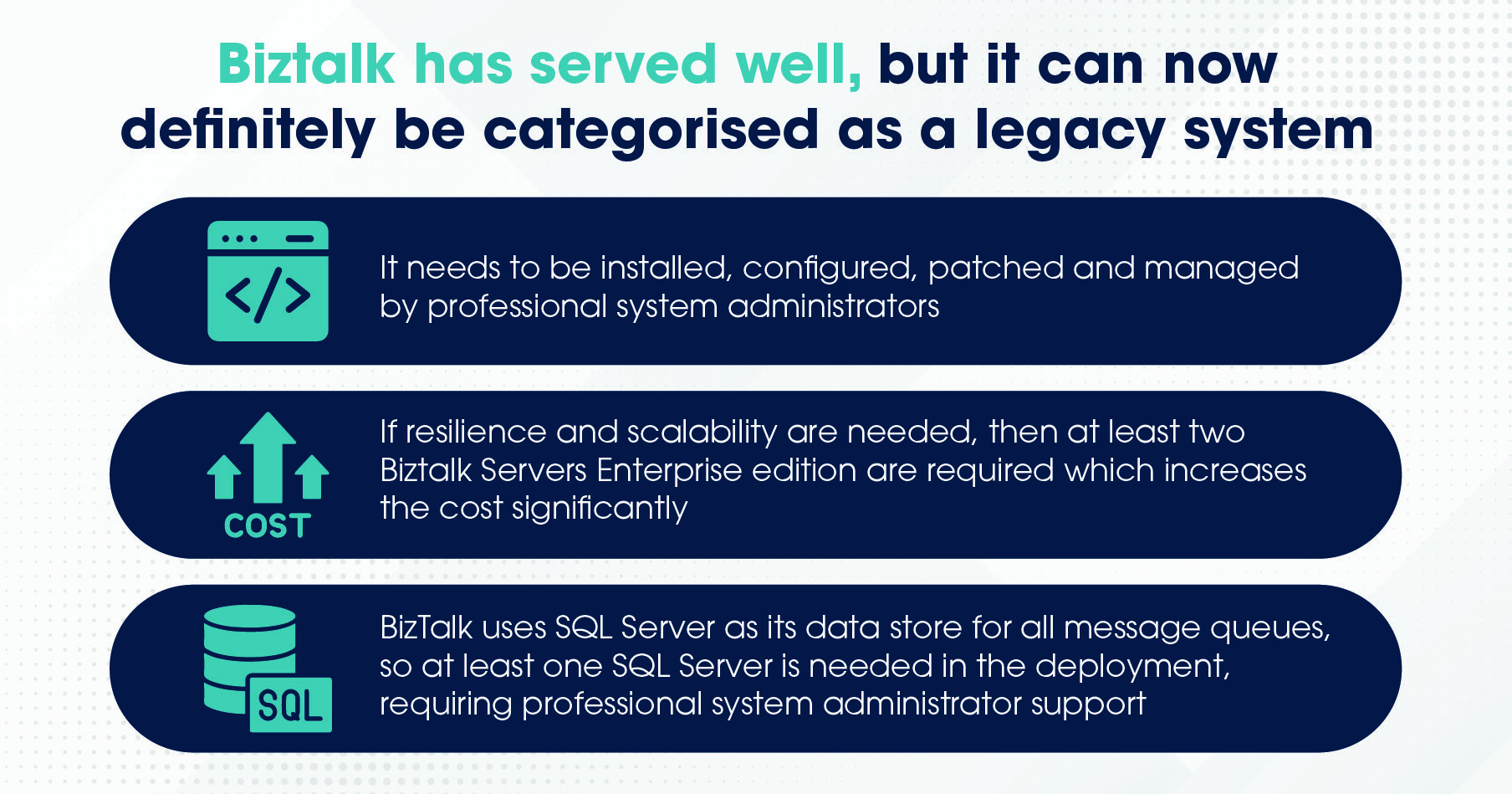
Biztalk has served well, but it can now definitely be categorised as a legacy system. It needs to be installed, configured, patched and managed by professional system administrators. If resilience and scalability are needed, then at least two Biztalk Servers are required and these both need to be Enterprise edition, all of which increases the cost significantly. Finally, BizTalk uses SQL Server as its data store for all message queues and so at least one SQL Server needs to be involved in the deployment and that requires professional system administrator support as well.
Notwithstanding all that; Biztalk does have all the features needed for integrating enterprise systems including:
Microsoft briefly toyed with producing a cloud services version of BizTalk called BizTalk Services, but this had greatly reduced functionality and had overlapping functionality with the new and more flexible cloud services already in Azure. So, BizTalk Services was eventually dropped in favour of what is now called Azure Integration Services.
WHAT IS AZURE INTEGRATION SERVICES
Azure Integration Services is not a new Azure service but instead is a collection of other Azure services. This makes a lot of sense, why try and produce a new service that contains functionality that already exists in other services, just add new functionality where needed and take advantage of the whole of Azure for everything else.
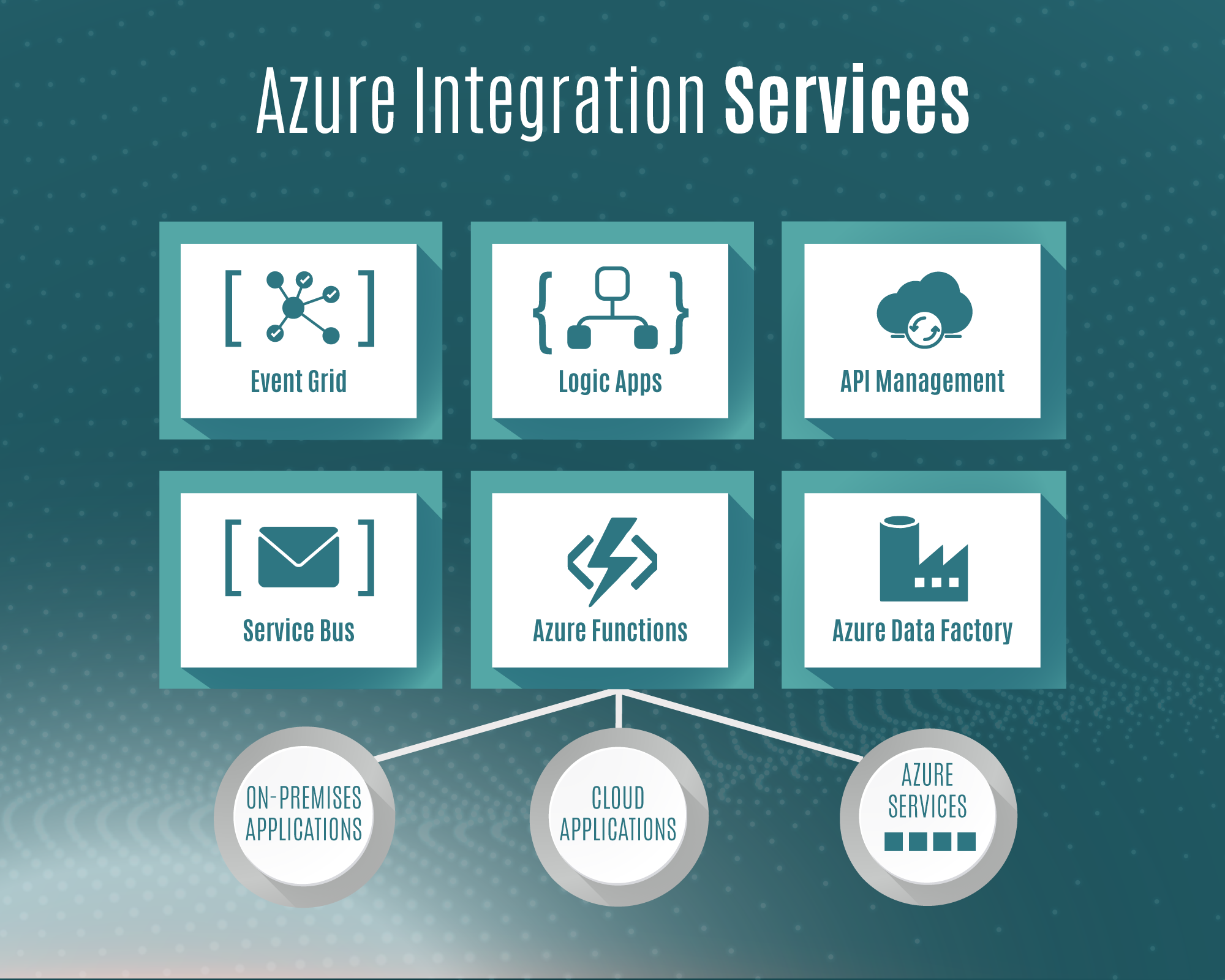
The core components of Azure Integration Services are detailed here: Azure Integration Services | Microsoft Azure and consist of:
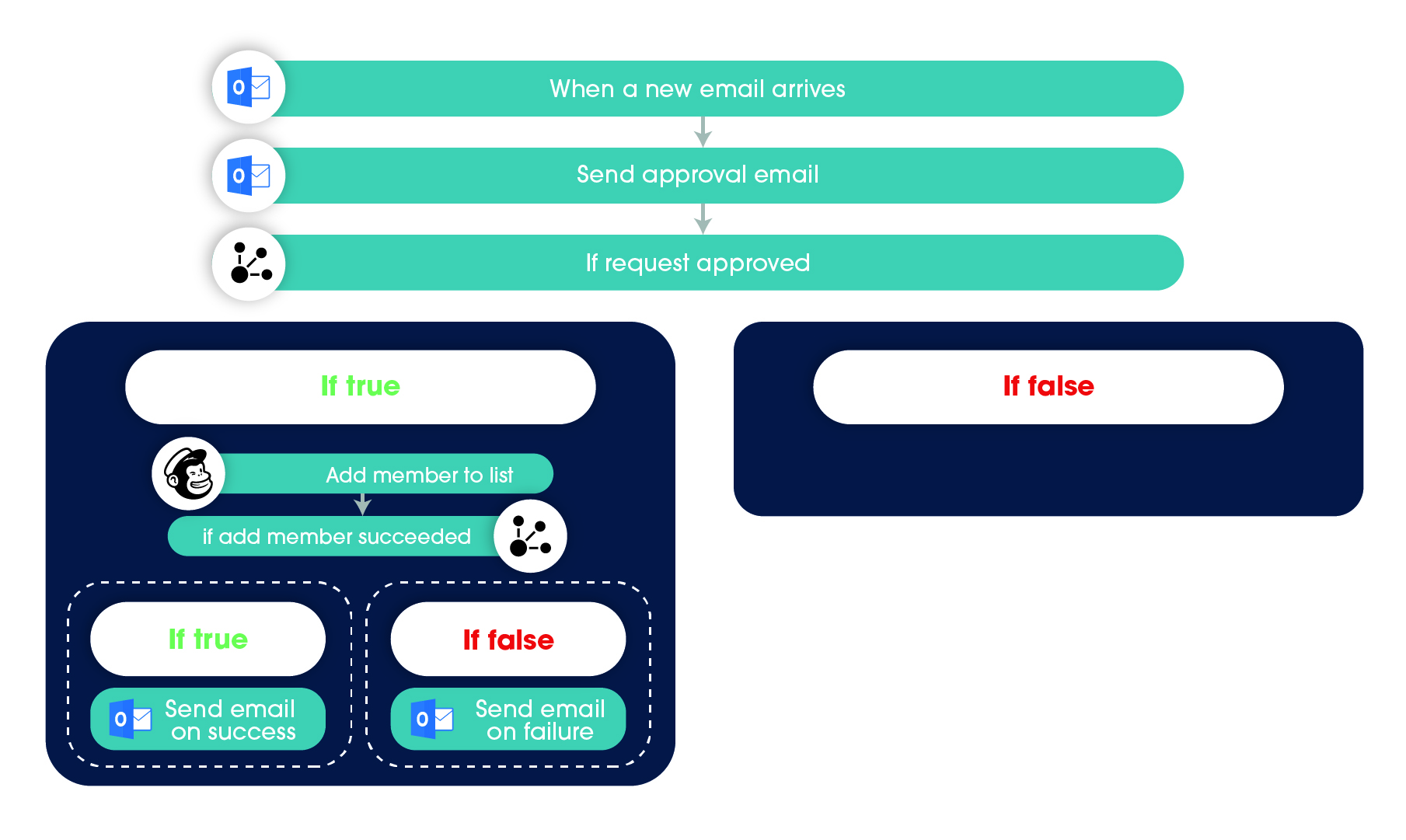
Plus, you can use any other Azure service that you wish such as SQL Azure, Azure Tables, CosmosDB, Blob Storage and much more.Logic Apps provides the following main features:
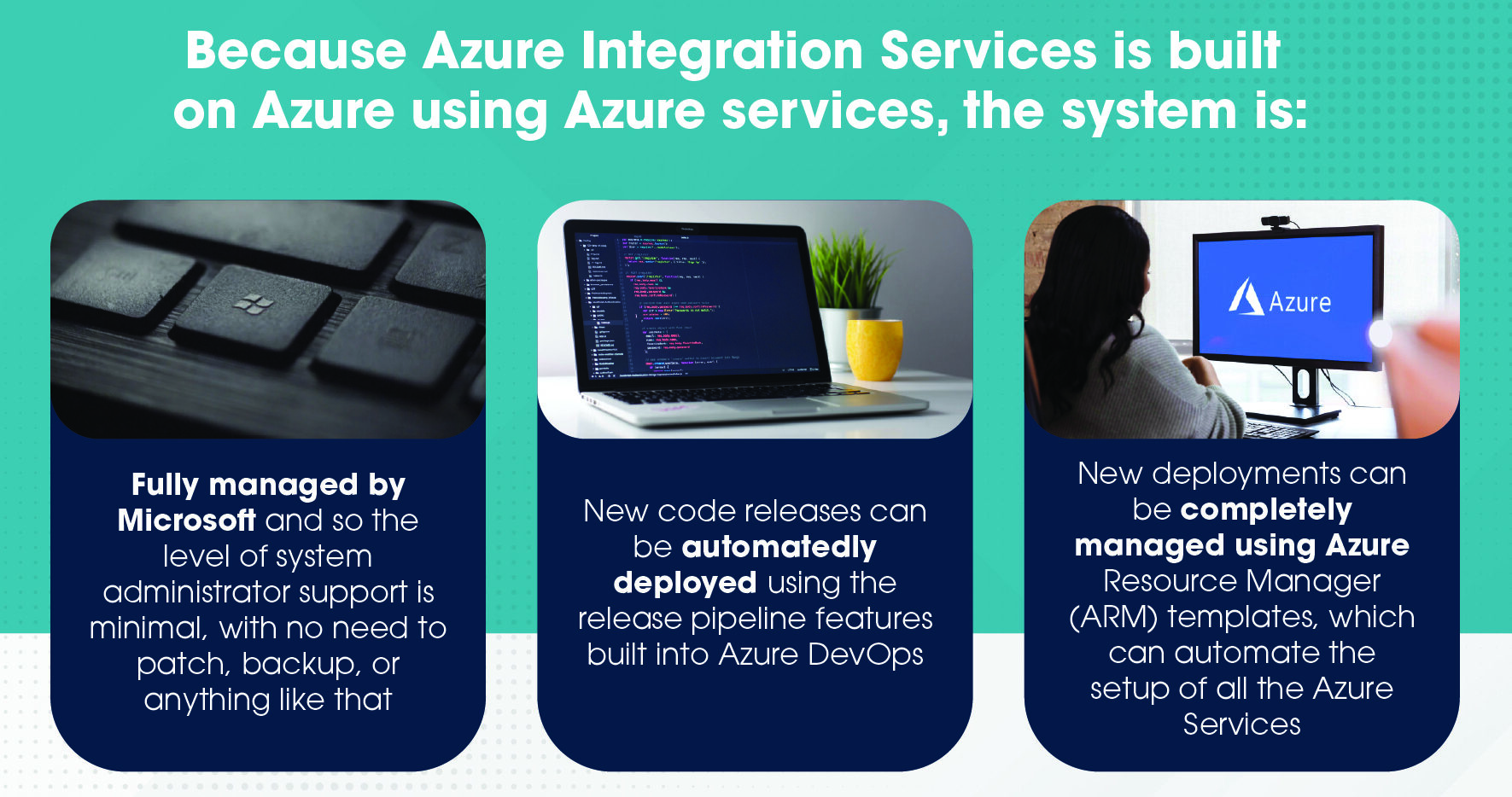
In addition, because Azure Integration Services is built on Azure using Azure services, the system is:
In summary, Azure Integration Services offers a greatly reduced administration overhead, compared with BizTalk and other systems.
TRANSPARITY DATA INTEGRATION HUB FRAMEWORK
Transparity have carried out a considerable number of data integration projects over the last fifteen years. Many of the earlier ones were based on BizTalk, some were just developed in C# as extensions of existing systems, and more recently they are based on Azure Integration Services. Although each of these projects involved different source and target systems and data sources, with different schemas and workflows, there is a common pattern to all of them. Some examples of these are:
Having done all of the above a number of times for different clients Transparity decided there was an opportunity to improve the speed and quality of future integrations by standardising the Data Integration Hub Framework that is used for these projects. The architecture of the resulting framework, which is 100 percent based on Azure Integration Services, is shown in the diagram below:
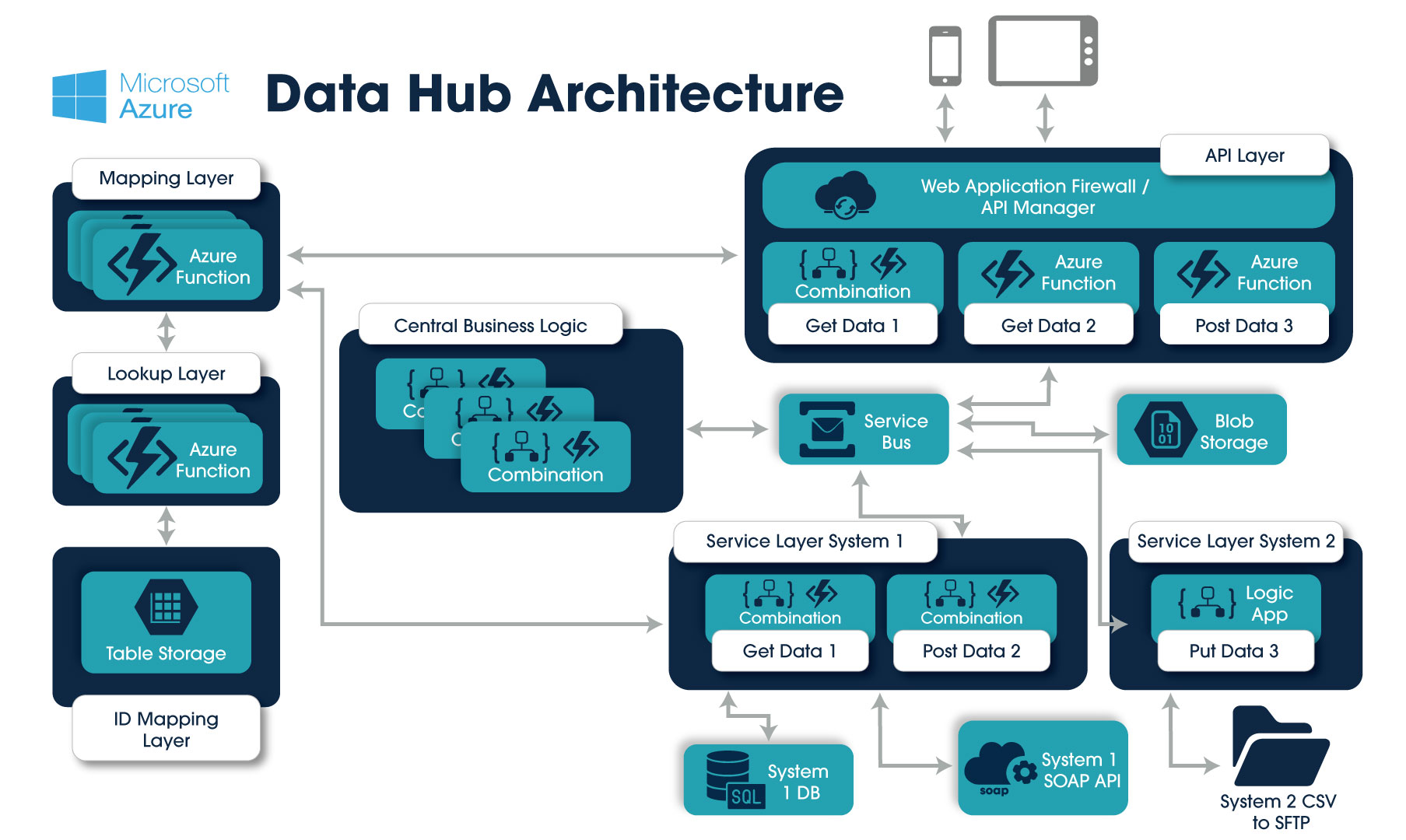
With respect to the framework, it can be observed that:
In addition:
SUMMARY
Azure Integration Services is a great step forward and a world-class cloud-based system for integrating systems in the cloud and on-premises.
When used in combination with the Transparity Data Integration Hub Framework, even the most complex enterprise data integrations can be created easily and risk-free. All using a tried and tested architecture and components based on Azure Integration Services backed up with fully automated deployments and monitoring.
 Leading Microsoft Cloud specialists Transparity have received JOSCAR accreditation, which demonstrates to companies in the defence, aerospace and security industries that suppliers have met a number of exceedingly-high standards.
An invitation-only scheme, the Joint Supply Chain Accreditation Register (JOSCAR) gives purchasers confidence that certified suppliers are “fit for business” and compliant with any necessary regulations, pre-qualifying them and reducing the amount of time and money spent procuring services.
As a specialist in Microsoft security and with one of the highest numbers of Microsoft Gold accreditations in the country, this additional certification is another way that customers can be sure that Transparity have the skills and experience to assist organisations in the aerospace and defence sectors.
David Jobbins, CEO of Transparity, said: “We are delighted to have been invited to become part of the JOSCAR register. This means that our customers can trust that we have met stringent standards and can assume the responsibility of supplying some of the UK’s leading defence organisations. JOSCAR registration is a critical component of the buying process for organisations such as the Ministry of Defence, NATS and Rolls Royce, allowing Transparity to work with companies for whom the very highest levels of security and operational excellence are critical.”
Transparity have been recognised in Microsoft’s annual Business Applications Summit hackathon “Hack4Good”, winning in the EMEA Region category and placing third globally.
For the first time, the event was held online and meant that even more of the Power Platform community could participate. The hackathon attracted 390 members in 49 teams, across 4 different time zones, who were tasked with demonstrating how Power Apps could help organisations during the current COVID-19 crisis.
 Wanting to use an example of a “real-life” solution, Transparity’s Intelligent Cloud team proffered an app developed specifically for a leading British manufacturer to help with proactive monitoring of their employees for infection control purposes. The team partnered with the customer to build a multi-purpose app using Microsoft Power Apps, Power Automate and AI Builder.
The modular app includes a contactless scanner to determine if an employee’s body temperature is elevated – a classic symptom of coronavirus – and will also record the number of scans, the results and the employee scanned, building visualisations and reports which can then be viewed by senior managers. It also allows for employees to self-assess their wellness – which the company requires them to do every 7 days – as well as sending anonymous, real-time notifications to managers and team members where an employee reports that they have been in contact with someone who has been confirmed as having COVID-19.
The team was led by Transparity’s Principal Consultant for Intelligent Cloud, Aaron Rendell, who commented: “It was imperative for our customer to ensure the health and safety of their employees, and to also mitigate the risk of exposure to the coronavirus. While we are delighted to be recognised so highly by Microsoft, for Transparity the real benefit is that we are able to help our customer manage their workforce’s return to site whilst minimising risk of exposure.”