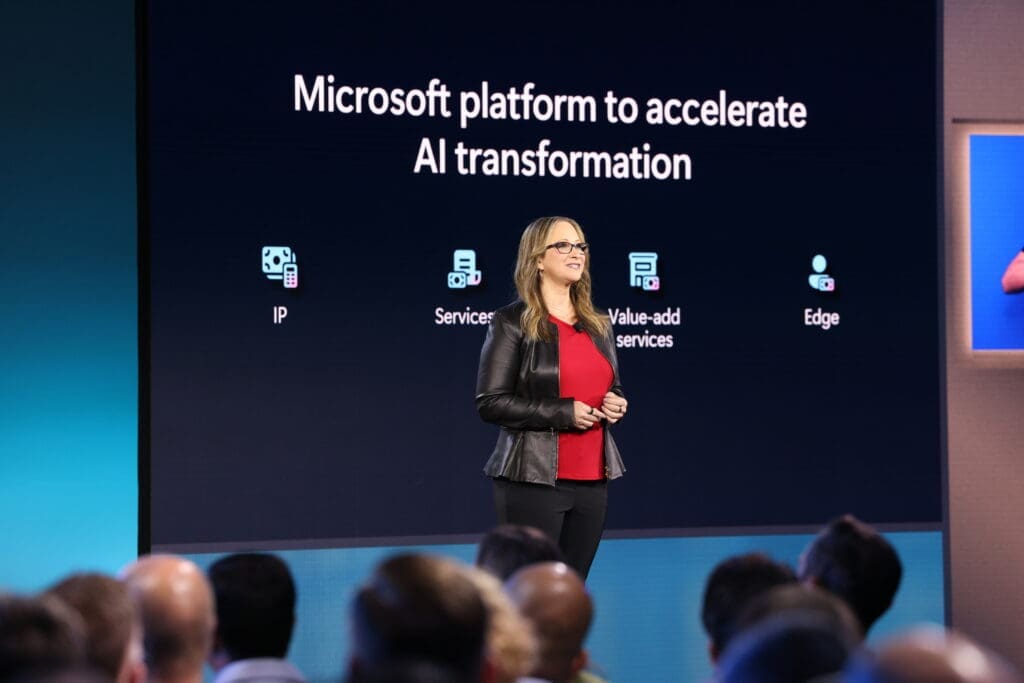
Reading, United Kingdom — 20/12/2023 — Transparity today announced its participation in the Microsoft Security Copilot Partner Private Preview. Transparity was selected based on their proven experience with Microsoft Security technologies, willingness to explore and provide feedback on cutting edge functionality, and close relationship with Microsoft.
“In the context of security, AI’s impact is likely to be profound, tilting the scales in favor of defenders and empowering organizations to defend at machine speed. At Microsoft, we are privileged to have a leading role in advancing AI innovation, and we are so grateful to our incredible ecosystem of partners, whose mission-driven work is critical to helping customers secure their organizations and confidently bring the many benefits of AI into their environments.”
Vasu Jakkal, Corporate Vice President, Microsoft Security
Transparity is working with Microsoft product teams to help shape Security Copilot product development in several ways, including validation and refinement of new and upcoming scenarios, providing feedback on product development and operations to be incorporated into future product releases, and validation and feedback of APIs to assist with Security Copilot extensibility.
“We are absolutely delighted to be selected as partner for the Security Copilot preview. This is testament to many years of hard work, securing our customers and deep expertise we have built to navigate today’s complex threat landscape. Underpinned by our Cyber Solutions Designation and MXDR certified SOC, the Copilot preview places us at the heart of a new world of AI-infused cyber solutions.”
Paul Bolt, CEO, Transparity
“We’re committed to ensuring that our customers can drive value through the practical adoption of generative AI. Security Copilot represents one of it’s most exciting applications – delivering intelligent, real-time, machine-scale insights to combat the growing cyber threats that face organisations today. We believe that Security Copilot will enable us to deliver greater value and protection to our customers, and we’re excited to be able to influence and support it’s development through our participation in the Security Copilot preview program..”
Kelvin Papp, CTO, Transparity
Security Copilot is the first AI-powered security product that enables security professionals to respond to threats quickly, process signals at machine speed, and assess risk exposure in minutes. It combines an advanced large language model (LLM) with a security-specific model that is informed by Microsoft’s unique global threat intelligence and more than 65 trillion daily signals.
App modernisation is a major challenge for many organisations we work with. Frequently their businesses will rely on a suite of custom applications developed piece meal over many years using a range of technologies. Initially they experience great benefits through streamlining and automation of business processes. However as requirements change it becomes difficult to evolve those applications built with legacy technologies. Inevitability new competitors come to market with their own solutions, built with newer and more efficient technologies and it becomes imperative to undertake application modernisation.
These were the challenges facing a client in the commercial property sector with their mission critical business rates application when they engaged with us at Transparity. Over the last four years we have partnered with them to transform the application and migrate into the Azure Cloud. As the principal architect working on the project from its inception to release I will share with you some of the key benefits they have realized since go live.
There are several possible approaches to application modernisation and migration. From simple ‘lift and shift’ migrations and those incorporating framework upgrades up to complete system rewrites. The final approach was adopted for this organisation’s application as the combination of legacy technologies currently in use were blocking any further improvements to the application.
The legacy application’s technology stack prevented further development efforts. For example a critical part of the system, the business rates calculation module, was implemented with PL/SQL scripts in an Oracle database. This severely limited testability and maintainability of the module. The modernised version of this module runs as a scheduled WebJob in Azure, implemented as a set of fully tested C# services. A key benefit of this approach is that changes can be made with assurance from the tests that existing functionality remains intact.
The company wanted to move away from the ‘monolithic architecture’ style of the legacy application towards a more ‘service oriented architecture’. This aligned with our vision for the application which we implemented as a .NET Web API with a separate ‘front end’ application consuming the API. This approach bore fruit later on when our customer expressed a need to increase the efficiency of some of the more basic repetitive tasks users were performing. They had an internal capability with automation bots and were able to integrate directly with the Web API layer to automate a set of tasks. This took a mundane workload away from their users and allowed them to focus on generating value for their clients.
The choice to implement an API also meant that the user facing application could be developed separately, with less tight coupling to the application data model. We chose the Angular ‘Single Page Application’ framework which has delivered a much faster an intuitive interface for their users. The same user application has also been opened up to a set of their key clients, replacing another separate legacy application and providing further efficiency gains.
Cloud solutions are often touted as more performant in comparison to on premise applications and this proved to be the case for our customer’s new business rates application. The ‘rates calculation engine’ needed to meet key performance metrics so it could either complete single calculations within 2 seconds or all the calculations within the system as a single batch. Using the Azure Service Bus in tandem with messaging processing WebJobs has enabled us to meet these demands. Processing of these requests, with high compute demand, runs asynchronously to the main application in a separate App Service Plan. This ensures that dedicated resources are always available and the processes can complete within the required time.
All of the key Azure resources in the application are scalable and this has been a key enabler for us to meet performance requirements. If a large batch of calculations must be processed in the live environment we have scaled up the Database and App Service resources to meet this demand. In contrast our Test and Development environments have much lower demands, so their resources are scaled down.
Naturally the ability to dynamically scale application resources offers real world cost benefits. This contrasts to the traditional on-premise IT infrastructure approach where hardware would need to be provisioned to match ‘worst case’ estimates of workload, which in practice often result in large amounts of under-utilised resource.
A particularly good example of this is our choice of database technology. The application uses a suite of ‘serverless’ SQL Azure databases across the live and test environments which are both scaled to meet demands and configured to ‘auto-pause’ when not in use. The savings of auto-paused databases are so large that the costs effectively become negligible in comparison to the rest of the resources. At the time of writing there are 61 databases in place for this particular application, however only a small percentage of them are online resulting in a much lower ongoing cost.
Through our years of experience in application development and modernisation we have been able to deliver a high quality solution which meets all key business needs. Hosting the solution in the Azure cloud has crystalised the benefits which were anticipated at the projects inception and ensured they can provide a market leading service to their clients for many years to come.
Join our webinar to hear more about the benefits of App Modernisation.
If you would like to discuss how we can bring similar benefits to your organisation please book a free consultation.
We believe that our culture differentiates us. We are committed to ensuring Transparity is a great place to work and an aspirational career destination within our sector. We participate in the Best Companies process to gain meaningful feedback and insights from our people so we can listen, learn, and continue to evolve. In addition, the opportunity to benchmark ourselves against other great organisations is also valuable. 

We are therefore delighted to announce that we have again been recognised in the list of the Top 100 Best Companies to Work For 2023 in the UK. Being placed at #32 on the list.
“This recognition is a wonderful endorsement to all the great people here at Transparity who care so much about what we stand for and the great work we do for our customers. A moment to celebrate and for the team to feel proud of their collective achievement”. – Paul Bolt, CEO
“We are proud of our trust-based Winning from Anywhere® culture and how we have been able to embrace this during our incredible growth. Our approach has enabled us to improve our employee engagement to outstanding levels, deliver a more sustainable way of working and support our equality and diversity aims”. – Neil Tune, Chief People and Culture Officer
“Our Best Companies to Work for Lists recognise and celebrate all the organisations who are helping to make the world a better workplace.
The Lists represent the commitment that these organisations show every day to their employees and how they have put investing in their people strategies at the forefront of their company culture.
Companies that prioritise their employees and organisational health will inevitably find success. By continuing to innovate their practices, improve their business strategies, and find new ways to show their employees how valued they are, these organisations are leading the way in engagement.
To make the Best Companies List is a remarkable accomplishment and Transparity should be proud of all that they have achieved this year.” – Jonathan Austin, Founder and CEO of Best Companies.
Incorporating the migration of data from one platform to another – such as from an on-premise system to a cloud-based approach – enterprises must be fully aware of the risks, benefits, and common processes involved throughout the data migration lifecycle. If not, this may lead to an unsuccessful migration – extending deadlines, budget, and resource demand.
Regardless of the reasoning behind a data migration project, every enterprise must first create a data migration strategy. This will form the project’s blueprint and will consider several considerations and constraints. It’s here in the data migration strategy that teams will find the answers to questions such as:
While data migration can be necessary and advantageous to many enterprises, teams may encounter several misconceptions in the consideration phase. If not addressed, these misconceptions may threaten to disrupt data migration processes through misinforming strategies. As a result, migration processes may be ineffective, lacking functionality, or expansive in terms of resource and cost.
At a glance, three of the biggest misconceptions include:
Learn more about some of these misconceptions, and the truth behind data migration below, or read more about our tried-and-tested approach to building data migration strategies.
Misconception #1: data migration projects are a one-time thing
It’s not uncommon for enterprises to think of effective data migration as a single transactional process – much like executing a task and waiting for it to finish.
However, successful data migration involves several stages to ensure effective and thorough completion. If teams fail to give each of these stages the care and attention they deserve, the result – and long-term quality of your newly migrated data – may suffer.
Rather than a single task to be completed, successful data migration involves three stages:
1. Pre-migration
As well as preparing the data migration strategy itself, pre-migration involves preparing the data in question, assessing any system requirements, as well as estimating the budget, deadline, and accountability.
2. Migration
The migration stage includes, unsurprisingly, the migration of data itself. This is the core stage that most stakeholders will be concerned with, and includes moving data from one system to another.
As well as migrating the data itself, this stage may also include the development of any additional infrastructure needed, as well as any application or code changes.
3. Post-migration
After data has been successfully migrated, teams must ensure that all users, teams, and stakeholders are sufficiently trained in the maintenance and use of the new system.
For IT teams this may include how best to monitor, maintain, and provide ongoing admin, for new systems and infrastructure. For end users, this may involve familiarising themselves with new interfaces. This stage promptly brings us to our next common misconception.
Misconception #2: Data migration is the sole responsibility of IT teams
While IT teams may be those responsible for ensuring effective and secure migration, this process involves almost every user across a business. In the pre-migration stage, getting the input of key stakeholders on requirements, objectives, and budget is essential.
Post-migration, communicating with all users throughout a business is essential, ensuring that they’re confident with new systems and infrastructure.
If users aren’t aware of how to correctly interact with, access, and store data in new systems, they may unintentionally increase the risk of data loss or breaches. Another consequence is a lack of confidence in new processes altogether – which may lead to disruptive data silos.
Misconception #3: Data migration strategies just involve copying data
For many, data migration may seem to involve the copying of data from one system to another, but it is so much more.
Data migration requires a well-planned strategy that involves the sophisticated transfer of data between systems. To facilitate this process, there are many different approaches to migration. Two of the most common approaches include:
Big bang migration
Big bang migrations are completed in a very narrow timeframe. Achieving this involves ETL processes and migration to new databases while all live systems are down.
Trickle migration
Trickle migrations are completed in phases. During these phases, the old and new target systems run simultaneously. As a result, trickle migration means very limited downtime or interruptions, if any. With processes consistently running, data can be continuously migrated.
Enabling effective data migration
Data migration strategies enable enterprises to take advantage of the benefits offered by centralised data sources such as those offered on the cloud. Through our team of specialists, we’re able to offer value-led services to achieve a vast array of business objectives – from managing successful data migration projects to implementing enhanced automated capabilities.
To learn more and discuss the best approach to data migration for your enterprise, book a free initial consultation with us today.
Offering many services and tools, Microsoft Azure can often be complex and challenging for users new and old to take full advantage of. Multifaceted in capabilities and dependent on use cases, many enterprises will interact with Microsoft Azure in unique and individual ways.
Previously, we’ve provided an introduction to Microsoft Azure, as well as an exploration of the many benefits that automation can bring to teams of any size.
To continue helping users across all skill levels to elevate their knowledge of Microsoft Azure, and empower how they interact with it daily, we’re providing some answers to five of the most commonly asked questions. These include:
What is Microsoft Azure?
At its core, Microsoft Azure is a constantly growing platform of cloud services designed to prioritise flexibility, scalability, and agility. Currently, there are over 100 Azure services, with each one designed to fulfil a specific use case and requirement.
Accessible to users via an online portal, Azure can work with all main operating systems and languages, and can be integrated with public cloud applications and existing architecture.
When it comes to maintenance, Azure can automatically repair, recover, and upgrade systems. For internal teams, this enables them to always trust in the security of insights and processes while freeing up valuable resource to focus on other critical tasks.
What are the most popular Azure services?
Sometimes it can feel as if the range of services available is never ending, and can often be a source of confusion and frustration for teams looking to achieve maximum functionality. Three of the most popular and commonly used Azure services are Azure Virtual Machines, Azure DevOps, and Azure API Management.
Azure Virtual Machines
Virtual machines can be spun up for a wide range of use cases, such as testing new operating systems or building cloud applications, and it’s never been easier through Azure.
With Azure Virtual Machines, users can create VMs almost instantly. Fit for purpose, these machines can be compute-optimised, memory-optimised, burstable, or general-purpose – empowering any user to take advantage of them.
Azure DevOps
DevOps may be the most popular Azure service available, enabling teams to build and work on applications collaboratively and simultaneously. In doing so, DevOps promotes communication and visibility between different teams such as developers, project managers, and testers, for a more streamlined approach to the development lifecycle.
Azure API management
Unsurprisingly, Azure API management enables teams to effectively manage and streamline their array of APIs, both on-premise and on the cloud, for greater ease of use and visibility.
As a result, users can achieve full compliance with security governance regulations through a centralised dashboard.
Is Microsoft Azure PaaS?
Due to the immense variety found in Microsoft Azure, many users can often find themselves confused on whether Azure is PaaS, IaaS, or SaaS. Let’s dive into this question a little deeper.
The reality is that there’s no single answer to this question, and it will depend on how your teams are interacting with Azure at your enterprise. Azure can take the form of each of these models – determined by the specific services used by each team.
Azure as IaaS
Through outsourcing network and computing demands to Microsoft through Azure, users can minimise their native infrastructure and manage a cloud-based alternative.
However, while Azure can function as outsourced infrastructure, all infrastructure will remain managed by the users themselves.
Additionally, Azure can also function as a virtual and secure data centre. Here, users can host websites as well as store data, test environments, and more.
Azure as PaaS
Azure also features PaaS-focused services, such as Azure Synapse and Azure SQL Databases, to provide teams of any size with the ability to reliably build cloud-based workloads.
The priority here is providing users with both control over the platform and trust in the infrastructure, scaling resources and performing configuration automatically.
Azure as SaaS
From a SaaS perspective, Microsoft Azure can host created applications as well as provide access to other Microsoft SaaS services.
This is made possible due to the universal flexibility that Azure offers, able to build and host products such as Outlook, Office 365, and other Microsoft tools.
How secure is Microsoft Azure?
Cloud-based platforms have traditionally encountered resistance over a fear of reduced security, but this is by no means accurate.
Accelerated by the recent pandemic, many cloud-based platforms feature comprehensive security features to ensure that any data uploaded and collected is kept safeguarded and protected.
Microsoft Azure boasts many of these security features, including but not limited to:
As many of these features are automated, the user can always be sure that their data and outputs are continuously always protected and monitored for the greatest possible security.
What are the advantages of scaling in Azure?
Many users turn to Microsoft Azure for a cost-effective and scalable solution to growing datasets and complex architecture. Scalability is essential for many enterprises, as business growth is almost always superseded by excelling datasets. Fail to accompany this concern, infrastructure will begin to lag – and processes will lack the agility and flexibility needed in increasingly competitive markets.
Azure offers an innovative feature known as Autoscaling, which initiates events based on predetermined settings. Autoscaling enables teams to meet changing demands in Cloud Services, Mobile Services, Virtual Machines, and Websites through automatically adjusting resource available based on necessity or other controls.
Just a few advantages of autoscaling in Microsoft Azure include:
Enabling trusted intelligence
At Transparity we’re passionate about enabling enterprises across a range of industries to harness their data to realise trusted and value-led intelligence. As Microsoft Azure specialists, we can help you realise how your architecture can be optimised, and how your datasets can be elevated. Join us for a free consultation to learn more.
However, achieving a data-driven culture is by no means an easy pursuit. Business Intelligence consultancies are the answer.
From regional retail companies to international manufacturing enterprises, data-driven cultures can help stakeholders and key decision-makers steer clear of unnecessary risk, helping to inform strategic decision-making through reliable data, rather than relying on instinct and guesswork.
A data-driven culture can help users identify previously invisible sources of new revenue and growth, helping to achieve business growth while avoiding potential disruption.
But how can enterprises enable a data-driven culture throughout their teams? For many, an outsourced data solution can be beneficial for this exact reason.
As BI consultancies collaborate with internal teams and users, they can help enable a reliable and informed data-driven culture that can enhance insights and processes company wide. Learn how below.
Communicating benefits to stakeholders
Often the adoption of a data-driven culture lies with key stakeholders. This is largely because new implementations and systems that reinforce a data-centric approach may require an initial buy-in and investment.
For frustrated internal teams seeking centralised data sources such as data warehouses to streamline operations and processes, gaining this buy-in can be challenging. This may be due to lack of communication, apprehensions surrounding budget, or concerns over required downtime – and the disruption caused.
For organisations in this environment, a free initial meeting with a BI consultancy can help ease the concerns of stakeholders and make them more receptible to enabling a data-driven culture.
These benefits can come in a range of forms, from demonstrating the importance of data as previously discussed, to showcasing the boost in productivity and growth now made possible.
By communicating the benefits of data-driven cultures to stakeholders, Business Intelligence consultancies can gain the critical buy-in and implement core systems to enable a more data-centric approach.
Demonstrate ease of use to current users
A data-driven culture can’t emerge without the trust of internal users.
Alternatively, the apprehension to adopt a data-driven culture can stem from internal teams themselves, rather than stakeholders eager to advance processes. Rather than concerns over budget and downtime, these fears can often be rooted in risks of redundancy, the need to adapt, and the need to gain new skillsets, amongst other reasons.
As a collaborative and communicative Business Intelligence consultancy, we strive to gain the trust and confidence of any internal teams concerned – listening to their worries and questions surrounding new systems and processes, before demonstrating the advantages that they’ll bring.
With the trust and confidence of team members, BI consultancies can ease the adoption of new systems – streamlining the reception of a data-driven culture that will thrive in the long term.
Streamline enterprise-wide operations
Data-driven cultures can also be enhanced and enabled as a side consequence of new BI implementations themselves.
With BI consultancies implementing new solutions that are designed to streamline operations, access to insights are made easier than ever – promoting a culture naturally in the process.
These streamlined solutions can take multiple forms – determined by the specific architecture and objectives of your business.
One such solution may be the creation of a single source of truth via a centralised data storage solution. Now, instead of users creating isolated data silos that can harm results and outputs, all data is accessible in the same location. Enhanced reporting is another area that can help to encourage a data-driven culture, demonstrating the ease of access to results, outputs, and information.
As a result, users may be more inclined to engage with meaningful, actionable insights, creating a more data-driven culture in the process.
Showcase the effect of data on risk
As well as communicating the effect of a data-driven culture on improvements to operational efficiency and clarity of reliable insights, Business Intelligence consultancies can also showcase the effect of a data culture to decrease risk.
In increasingly competitive markets, these risks can take on several forms, both internally and externally.
One of these risks is a limited margin for error. For businesses trying to maintain a competitive advantage, and for those looking to scale and access new markets, the margin for error has become finer and finer. As a result, strategic decision-makers must understand and appreciate the dependability of data intelligence over intuition.
Another risk that a data-driven culture can decrease is possible breaches or data loss. With teams informed on the importance of data, and how users should interact with data and maintain it, the potential for breaches or loss caused by human error will be greatly reduced.
These benefits will run their course throughout the organisation as a whole. With a decreased chance of risk, stakeholders may gain access to greater budgets for internal investments – be that upskilling team members, introducing more resources, or implementing greater capabilities.
Data-driven cultures and you
A data-driven culture is an essential component for any organisation looking to optimise the actionable intelligence available to their teams and the level of insights possible.
Collaborative BI consultancies should communicate the importance of effectively storing and managing data, the benefits it can bring throughout an organisation, and the risks it can avoid. In doing so, all teams will be more inclined to adopt a data-driven culture.
To learn more about how your organisation can leverage your data to realise your business objectives, book a free discovery call with us. Here, we’ll work to understand the unique characteristics of your architecture, before working alongside you to create a value-led solution. Book your call today.
Transparity are proud to release our first Net Zero Report and announce that its findings confirm we are now an officially carbon neutral organisation .
As part of our ongoing ESG (Environmental, Social, and Governance) commitments, we commissioned a review to understand and calculate our total GHG (Green House Gas) emissions across scope 1,2 and 3.
The work was carried out in partnership with Sustainable Advantage who provide expertise and a robust process of measurement in accordance with the relevant standards and protocols.
This has resulted in the publication of our first ever net zero report that not only confirms we are carbon neutral, but also includes our carbon reduction plan to achieve net zero by 2045. We will review and report on our progress each year.
As a result of our unique culture and the adoption of a digital tools and a cloud first approach we have been able to embrace our Winning from Anywhere® strategy enabling us to significantly reduce our carbon footprint, continue to deliver great outcomes for our customers and develop a way of working that provides choice and flexibility for our teams.
The significant reduction in our carbon usage and the robust measurement process has enabled us to offset our scope 1 & 2 carbon emissions and partially offset our scope 3 emissions, including fully offsetting those relating to Winning from Anywhere®.
We are delighted to confirm we have met the requirements to achieve Carbon Neutral Britain certification and have offset through Carbon Neutral Britain™ and their Climate Fund™ into projects underpinned by the UN CER, VERRA and Gold standards.
“We are proud of our trust-based culture and how every member of our team embraces our way of working. It is fantastic that this approach can also be used as a force for good in supporting the Woodland Trust and we can reduce our environmental impact through Carbon Neutral Britain™'.”
Neil Tune, Chief People & Culture Officer at Transparity
In addition to these offsetting initiatives, we have just completed year one of our partnership with the Woodland Trust and agreed our support for year two. In year one over 95% of our customer consulting work was delivered remotely. Each of these days resulted in a new tree being planted and we were able to contribute £28,000 to the Woodland Trust supporting their Emergency Tree Fund.
We recognise the benefits of nature as part of our wellbeing initiatives and strongly support the Woodland Trust programmes that promote both wellbeing, connections with our environment and improve biodiversity.
“Our Net Zero report and the achievement of Carbon Neutral status are two examples of our commitment to being part of the solution, not the problem. Our learnings and the digital transformation of our business model mean we are well placed to share these and help our clients on their own journey”.
Paul Bolt, CEO at Transparity
Our net zero report and certification can be viewed on our website here.
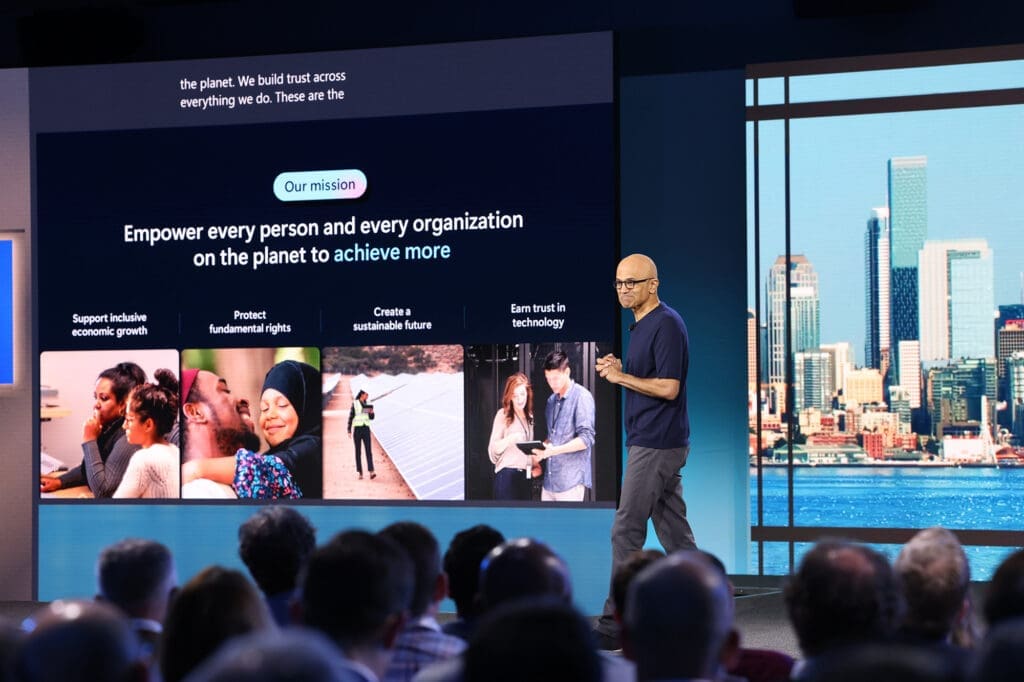
This year’s Microsoft Inspire was one for the record books, as Microsoft announced a range of new releases across the technology stack. Microsoft Inspire is Microsoft’s annual partner conference, offering partners the opportunity to see what’s new, what’s coming and how they can leverage this tech to make a difference for customers.
This year, Microsoft’s key focus was on artificial intelligence (AI) and it’s embedded AI-assisted features across their product portfolio, termed Copilot. What is clear is that AI has landed, it’s production-ready and is ushering in a new era of productivity for businesses.
Following the most recent Microsoft Inspire event there is no doubt in Microsoft’s focus, with AI being at the heart of a number of key announcements. Chairman and CEO Satya Nadella went on to say, “We are in the midst of a massive platform shift with the new generation of AI”.
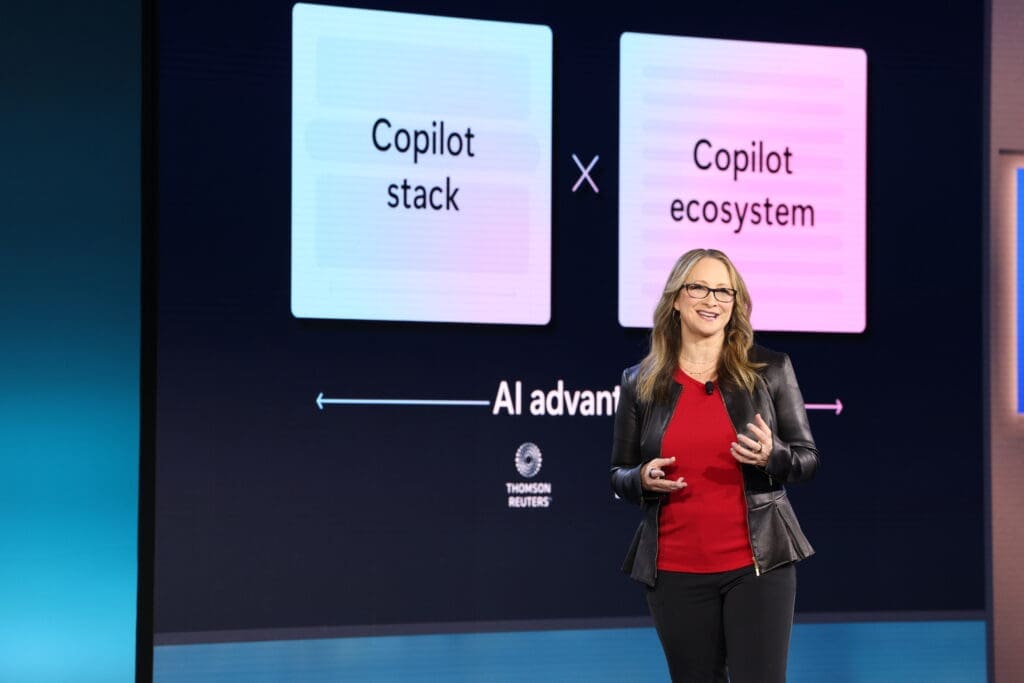
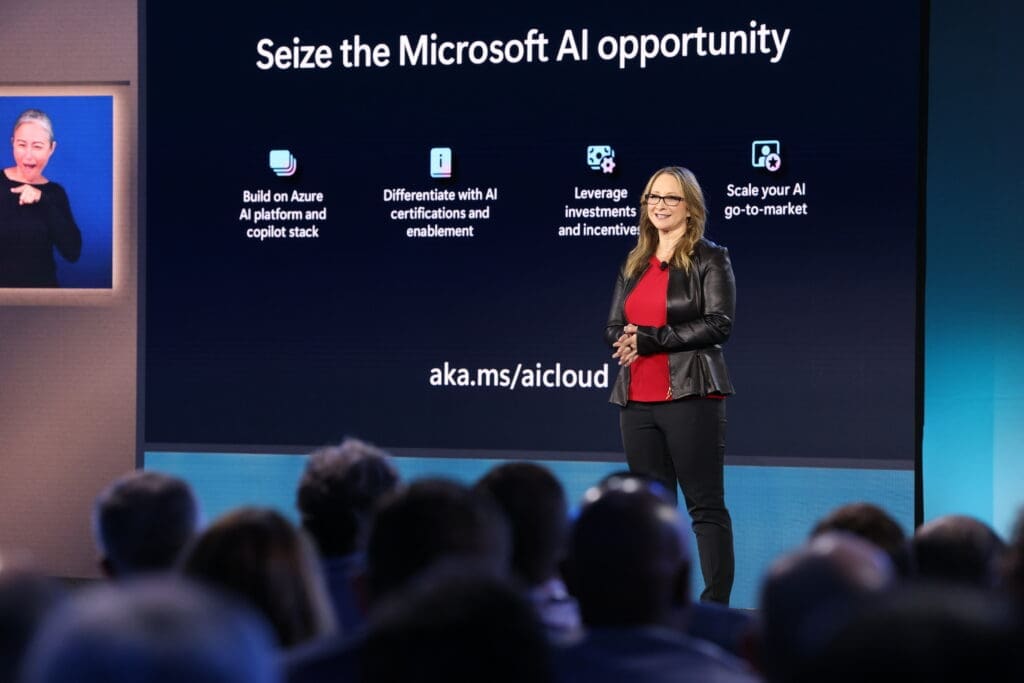
Whilst AI is becoming a fundamental facet of Office 365, Power Automate and Bing, there was a few announcements which impact the Data & AI practice and our customers. The first being the launch of the Microsoft AI Cloud Partner Program and putting partners at the heart of enabling customers to leverage the value of Microsoft AI and the cloud.
The new program will give partners access to onboarding, skilling, go-to-market, incentives and co-selling across all business models and stages of maturity. An exciting development and potentially opening up the possibility of AI based programs of work for all customers. A dedicated program offering support and resource not only shows Microsoft’s commitment to the AI space but supports partners in the delivery of AI based solutions. It’s clear that Microsoft are putting partners at the heart of AI delivery and providing the necessary tools for partners to leverage Microsoft’s AI capabilities to the fullest.
Whilst Copilot in Power BI is in private preview stage, we can’t help but get excited at the potential use cases once it becomes available to the masses. Infusing the power of a large language model (Copilot) into all aspects of Power BI will enable users to get more done and create more value from their data. Allowing users to simply describe the visuals and insights they are looking for and letting Copilot do the rest. Copilot will also streamline report creation, DAX calculations and allow users to ask questions of their data. The introduction of Copilot makes the reality of self-service reporting/analytics one step closer with reports being built based on conversational language.
Power BI is already intuitive and rapidly adopted by users due to it’s simple and familiar interface, drag and drop features and ever-expanding marketplace. However, the introduction of Copilot removes any remaining barrier of entries with the hard work being carried out by Copilot. It’s easy to conjure up images of what Copilot might be capable of, but we eagerly await its public release so we can start to leverage it for our customers.
It’s not surprising that Microsoft have seen a demand from businesses looking to adopt Azure OpenAI services, the impressive uptake was followed by the announcement that Microsoft are increasing availability in North America and Western Europe, whilst making it available in Asia for the first time. There is a clear demand for all things “AI” currently and the recent Inspire event shows Microsoft commitment to this space.
Some of these features have previously been referred to as Viva Sales, which has now had a rename and change of icon. Providing an AI assistance in Dynamics 365 Sales and embedded in Outlook and Teams. Said to save salespeople up to 5 hours per week, Sales Copilot provides data from Dynamics into Outlook and Teams, summarising customer data before meetings and creating real-time prompts during teams meetings, as well as using generative AI within Outlook to create meeting summaries, respond to queries, and generally save time for a sales team.
Power Automate Process Mining transforms the way a business can analyse processes using AI to identify bottlenecks and recommend automation (even creating the flow for you). Improve your processes, get a hand from AI with root cause analysis, reveal inefficiency and find opportunities to automate. Generally available on 1st August.
New, great features coming in the next wave around October/November. Including AI generated Proposals, Opportunity summaries, Calling insights for 3rd party softphones (no-longer just for Teams), and loads other AI-infused goodies.
Security is no exception to the AI revolution, with Microsoft announcing the preview of Security Copilot. Aiming to help teams ‘defend at machine speed’ Security Copilot promises to help simplify the complexity of an attack, helping users respond faster with data from multiple sources and helping to address the talent gap.
While Copilot is no replacement for highly skilled security analysts, it will help speed up triage and investigation and free up resources to do other things. As with all AI, Security Copilot won’t be infallible and will make mistakes, so a skilled security analyst will still be required to validate the information it produces and act on the right outputs.
Microsoft has announced they are tripling the incentives investment for Azure Migrate & Modernise (AMM) and adding an additional investment called the Azure Innovate program. AMM is aimed at workloads and projects such as Server & SQL migrations, Enterprise Apps, VDI and HPC. The Azure Innovate program is aimed at building advanced solutions using AI, Cloud Native applications, analytics and app modernisations. With this program, customers have access to extensive guidance, POCs, tooling, frameworks and access funding via specialised partners such as Transparity.
The most important tool in Azure regarding solution migrations has had some useful upgrades during Inspire. Azure Migrate now supports in-place upgrades from end-of-support Operating Systems such as Windows Server 2012 to a secure OS including Server 2016 or 2019. Understand any possible issues with the upgrade by upgrading to a test environment without impacting the production workloads.
The business case report in Azure Migrate now allows you to view possible savings related to security components by comparing industry benchmarks for securing on-premise servers against Defender for Cloud in Azure. Microsoft also announced a collaboration with Tanium that allows current Tanium customers to create migrate assessments and business cases out of the box without the need for a Migrate Appliance.
End of support is coming for Windows Server 2012/R2 and SQL 2012 resources in October. Prior to Inspire, the only way to get continued support was by moving a workload to Azure to benefit from free extended updates or by purchasing extended protection. Microsoft has announced ESU enabled by Azure Arc that provides the ability to purchase protection for on-premises servers managed by Azur Arc via the Azure portal. This solution is great for customers who still have some on-premises workloads that cannot be migrated before the deadline. It allows you to simply secure and patch on-premises workloads as if they were running in Azure.
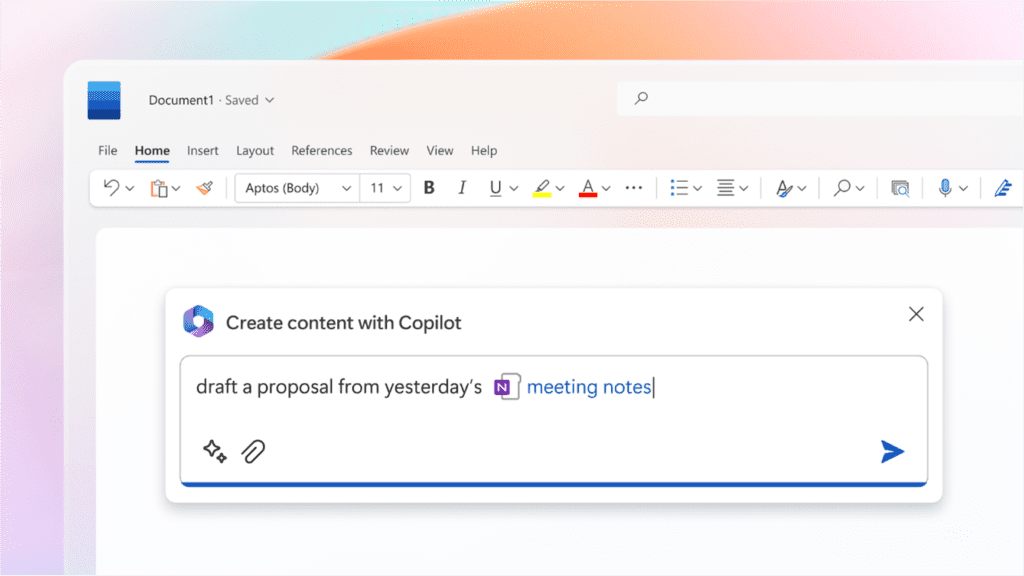
As with other areas, the big announcement at Microsoft Inspire for Modern Work was focused on showcasing the wide-ranging talents of Microsoft 365 Copilot. Promising to bring far more than “just” embedding ChatGPT into Office, Copilot is designed to learn about your business and the data your users work with each day.
Whilst respecting the underlying permissions, Copilot has been shown to draft proposals from previous documents, saving users time by not having to manually find examples that may already exist within the business or by using notes taken from recent Teams meetings – the cost savings could potentially be huge, but organisations will need to think carefully who warrants licensing.
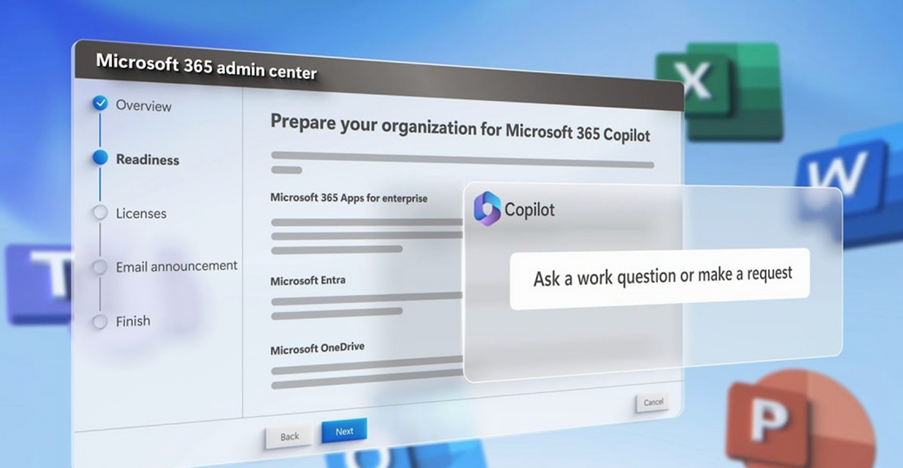
Whilst things are still going to be locked behind a private preview for some time, those wanting to make the most of the M365 flavour of Copilot in the future should start to prepare now to hit the ground running. This includes making sure you have a plan to push out the absolute latest versions of M365 Apps (aka Office), including preparing for the currently in-preview version of Outlook and enabling OneDrive and Loop.
General data permissions and security will also be at the top of the readiness checks, with a push to make sure users have what Microsoft refer to as “just enough access” – tools like Purview will likely have a renewed push over the coming months alongside Copilot.
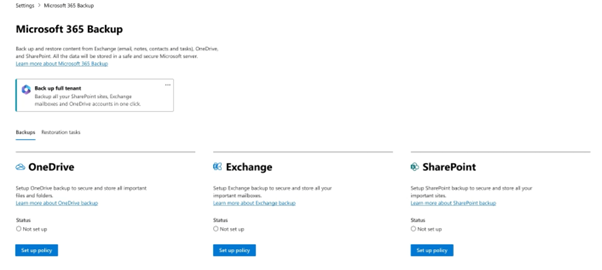
The other key announcement for Modern Work focussed on the announcement that Microsoft will be launching their own Backup and Archiving products – We can expect both tools to be available in public preview by the end of the year under separate banners. Across the backup tooling, Microsoft will allow select or all sites, OneDrives or mailboxes to be backed up within the M365 security wrap and restored entirely or at a specific individual file level.
These new capabilities should also see 3rd party products up their game, with new APIs being promised to allow partner products faster and more reliable interaction with M365 hosted data.
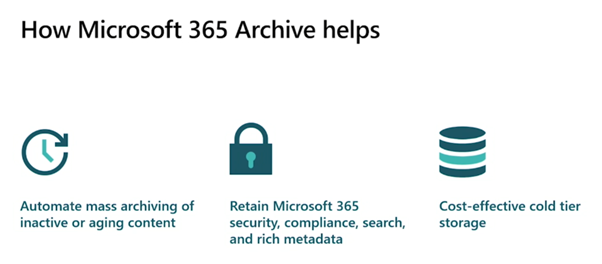
On the archiving side, new tooling should hopefully give organisations who are creeping further towards storage limits more clarity on how to manage the final lifecycle elements of SharePoint sites, with automated workflows able to involve site-owners in the decision making when it comes to archiving content into more cost-effective tiered storage. Best of all, archiving promises to support the full compliance toolkit, ensuring data can still be labelled, protected and visible to eDiscovery.
Marketing is the lifeblood of any business, powering growth and paving the way to success. But let’s face it – getting it right can be a real challenge. There are many moving parts to consider, from lead generation, content and campaign management to measuring results. It can be tough to know where to focus your energy to get the biggest bang for your buck. With all these tasks vying for your attention, it’s no wonder that many marketers feel like they’re drowning in a sea of emails, spreadsheets, and never-ending to-do lists.
But fear not, because automation is the key to reducing these disconnected manual tasks. In fact, a recent survey found that over 30% of marketers would like to automate tasks like data entry and tracking, while another 28% are eager to automate lead management.
That’s where Dynamics 365 Marketing comes in, offering easy-to-use tools that can help streamline your marketing efforts and boost conversion rates. So, if you’re looking to simplify your workload and increase your ROI, Dynamics 365 Marketing is the solution for you.
Let’s get personal! In today’s digital world, personalisation is king. Did you know that 80% of customers are more likely to engage with a brand if they’re offered a personalised experience? And that’s not all – 68% of people are happy to share their personal data in exchange for a personalised experience. It’s clear that customers want messages that speak to their individual needs and preferences.
Thankfully, marketing automation has made it easier than ever to deliver personalised messages to your customers. Dynamics 365 Marketing comes with comprehensive marketing automation tools and it’s recognised by the experts at Gartner as a leading solution for businesses looking to deliver personalised messaging at scale.
Using Dynamics 365 Marketing, you can easily segment and target audiences based on their behaviours, interests, and preferences. This means you can create detailed customer profiles and tailor your marketing messages to each and every customer. That personalised touch can work wonders. It can help you achieve higher engagement rates and even increase your conversion rates.
Did you know that 80% of marketing professionals believe that having automation software is a key ingredient to improving lead nurturing performance? And it’s no wonder – managing leads can be difficult without systems talking to each other, and can be made especially difficult with the love-hate relationship between sales and marketing teams. But with marketing automation, they can come together and work cohesively.
Enter Dynamics 365 for Marketing – this app has all the tools you need to manage your leads effectively. With its automated lead-scoring system, you can easily qualify leads at every stage of the customer journey, based on email engagement, website visits, and event registration etc. The sales team can then use this data to continue nurturing the lead until they’re ready to convert.
And that’s not all – Dynamics 365 for Marketing also offers customisable lead dashboards that give you an overview of your lead health. You can keep track of important interactions and pipeline progression, and adjust your strategy as needed.
Managing campaigns can be a daunting task, but Dynamics 365 Marketing streamlines the process by providing a single platform for creating and managing campaigns. With the app’s automation workflows, you can simplify complex tasks, such as email sends, social media posts, and follow-up actions. The app’s real-time campaign performance tracking feature allows you to monitor campaign performance and make adjustments for better results. This level of control and optimisation enables businesses to drive conversions and achieve their marketing goals efficiently.
Dynamics 365 Marketing is a comprehensive solution that enables businesses to launch and manage multi-channel campaigns with ease. With the app’s intuitive templates and design tools, you can quickly create professional-looking branded emails, lead capture forms, and dynamic landing pages.
We all know that measuring the success of our marketing campaigns is key to making those killer data-driven decisions. But let’s not forget that collecting the right data is equally important. According to HBR-AS, only a quarter of companies gather customer data across different channels to get a unified view of their customers and prospects.
Dynamics 365 for Marketing, with its comprehensive and intuitive analytics tools, can collect and analyse all the important metrics like email open rates, click-through rates, and conversion rates and collate it in one place. And not just that, but you can also dive deep into customer engagement and behaviour to spot trends and patterns. This will help you fine-tune your strategies and tactics to generate more leads and achieve your goals.
Dynamics 365 Marketing connects and syncs with other Microsoft apps to make your marketing game stronger. No more juggling multiple platforms, no more tedious data entry, just pure efficiency and productivity. Plus, with all your valuable data pulling through to one central location, you’ll have the insights you need to make data-driven decisions and hit your marketing goals.
Here’s six native integrations and how they work:
Dynamics 365 Marketing’s powerful integration with other Microsoft 365 apps unleashes the full potential of your marketing team. Say goodbye to siloed systems and hello to streamlined workflows, seamless collaboration, and data-driven insights. With Dynamics 365 Marketing, marketers can easily capture leads, automate workflows, create stunning campaigns, and track their performance, all from one unified platform.
Marketing can be a challenging and complex task for organisations, but with Dynamics 365 Marketing, many of the manual day-to-day tasks can be reduced. With personalised marketing, lead management, campaign management, marketing analytics, and seamless integration with other Dynamics 365 apps, you can easily reduce pain points and increase sales conversion. By tapping into these amazing capabilities, you can supercharge your marketing efforts, boost customer engagement, and drive business growth like never before. Let’s get started on this exciting journey.
To succeed in the digital world, it’s crucial to quickly utilise available tools and make informed decisions that support your business ambitions. The contentious chemistry between Sales and Marketing teams is what makes the commercial world go round. Getting it right isn’t always easy, but it holds the key to big business impact and organisational growth.
In fact, organisations with closely-aligned sales and marketing teams see 24% faster growth. When these two teams are not aligned, it can lead to a number of problems that can cause friction and stunt growth. For example, 80% of leads generated by marketing are not contacted by sales. In this blog, we will explore the benefits of connected sales and marketing and how businesses can implement it using business applications from Microsoft.
Connected sales and marketing is a process that aligns the efforts of the sales and marketing teams to achieve common goals – driving revenue and building client relationships. The goal is to provide a seamless experience for the customer, from the moment they become aware of a product or service until the point of purchase, and beyond. It is also to ensure that a hot lead gets straight to the right available sales person, and that everyone in the business knows what part they play in bringing in revenue, and no step falls between the cracks. The process involves the sharing of data, insights, and strategies between sales and marketing teams.
There are a number of benefits of implementing a connected sales and marketing process, including:
To implement connected sales and marketing, businesses need to follow these steps:
Dynamics 365 Sales is a customer relationship management (CRM) application that helps sales teams manage their leads, opportunities, and accounts. And from lead->opportunity->quote->order->invoice, it is a complete sales force automation solution. It provides a single view of customer data, allowing salespeople to better understand their customers and personalise their sales approach and automate many levels through the sales cycle.
Dynamics 365 Marketing, on the other hand, is a marketing automation application that helps businesses generate and nurture leads. It allows marketers to create and manage marketing campaigns, manage events, website content pages, track customer interactions real-time (and nurture through a journey), and measure the effectiveness of their marketing efforts.
Together, these applications allow seamless handover of leads from origination, nurturing and qualification through to sales. Marketing can easily receive back disqualified leads and lost opportunities into a re-nurture path, and the sales team can see all the interactions in a single place. Built-in business process flows manage the steps from warming a lead through; automated marketing, marketing qualified, sales accepted, sales qualified, and then various opportunity stages through to close.
Connected sales and marketing is a process that aligns the efforts of the sales and marketing teams to achieve a common goal. By implementing connected sales and marketing, businesses can gain a better understanding of their customers’ needs and behaviours, increase efficiency, generate better quality leads, and provide a seamless customer experience. Microsoft Dynamics 365 can provide you with the full lead to cash process, end to end, from a completely anonymous visitor, through to a fully-fledged loyal customer. If you’re looking to achieve growth and profitability, connected sales and marketing is definitely worth considering.
Our people are what makes Transparity special. So, we’d like to introduce you to some of our team so you can get to know the people who make it all happen. Introducing Marc Hadley-Smith, Head of Practice: Business Applications.
Most of my highlights involves meeting a massive business challenge head-on. And none so big a challenge faced as that experienced by a global commodities producer and trading business. At the time, the market in was suffering a 15-month downturn in demand and our client was looking to redesign their entire digital footprint, building out their sales automation and supply chain as well as finance and manufacturing processes. There were a few nay-sayers that didn’t think it could be done, but needless to say, we landed the multi-million dollar contract.
Another example was with a prospect that had previously been struggling with digital transformation. I was pitching Microsoft Dynamics to a particularly tough crowd and was pleasantly surprised to be offered a job by the CEO there and then.
Having a lockdown puppy has put paid to my leisurely start to the day – I am now up for the early dog walk on days that don’t clash with my newfound love for CrossFit, followed by the requisite protein shakes, a strong coffee and ready for the workday.
Currently I am getting around all the Transparity folk to introduce myself and understand what makes them tick. The business has grown massively over the last few years and I want to make sure that the secret sauce flows into Business Applications as successfully as it has everywhere else.
I love the sea. I started off-shore sailing at university a million years ago and really enjoyed the excitement of the high-energy racing as well as the peace and tranquillity of sailing in the middle of the night with just the sound of the waves and the phosphorescent glow in the wake. Admittedly I don’t get out on a boat as much as I used to, but I’ve made a promise to myself to get back behind the wheel more this year.
I can’t say I was ever a morning person and frankly the monotonous London commute very rarely set one up the right way for the day. Fortunately, our Winning from Anywhere™ setup now means I can enjoy the satisfaction most mornings of sitting down at my desk with a cup of coffee at home, knowing that I’ve already done 80% of my steps goal and appreciated the calm Kent countryside.
My guilty love of spy thrillers – be it reading Clancy, Ludlum, Baldacci or more recently watching Slow Horses on the telly – I would love to be the head of GCHQ. Definitely an ever-evolving and challenging job, managing intelligence and dealing with global threats including the increase of disinformation on the world-stage.
I studied Biomedical Sciences at university. If the lecturer didn’t do such a bad job at our IT familiarisation training that made me realise I had a flair for tech, I’d likely be working in a lab, cooking up the latest miracle drug. Or a boatswain on a luxury yacht!
Focus on what matters and what you can control.
It’s too easy to get pulled in to doing everything all at once, not doing any of it well and worrying about things you cannot change. I was introduced to the 4 quadrants of time management early on in my career by a great manager and it has always stuck.
I have a deep wanderlust and find travel both soothing and exciting. Right now though, after planning my next ski trip I’ll be window shopping through boating magazines and finding the next Netflix season to binge-watch.
Teleportation! I could have chosen something corny like being able to read people’s minds (frankly, I find that idea utterly terrifying!), but to me, now that we are working more and more remote any commute in traffic is such a bore and waste of time. Plus, I could get to South Africa for some R&R much quicker than a jumbo.
Working with such highly motivated people, who are customer centric is the greatest joy – I have only just dipped my toes in, but already can tell I am at home here. I’ve been really impressed with the people and the respect Transparity has in the industry. I am looking forward to making my own mark in the business and taking the company to the next level in growth.
Introduction
In the ever-evolving digital world, managing user identities, and providing seamless authentication experiences are critical aspects of any business’s success. As organisations evolve and strive for more robust identity solutions, migrating to Azure Active Directory B2C (Azure AD B2C) has emerged as an excellent choice. This blog post explores the benefits of moving to Azure AD B2C as your identity platform and how it can streamline your identity management processes.
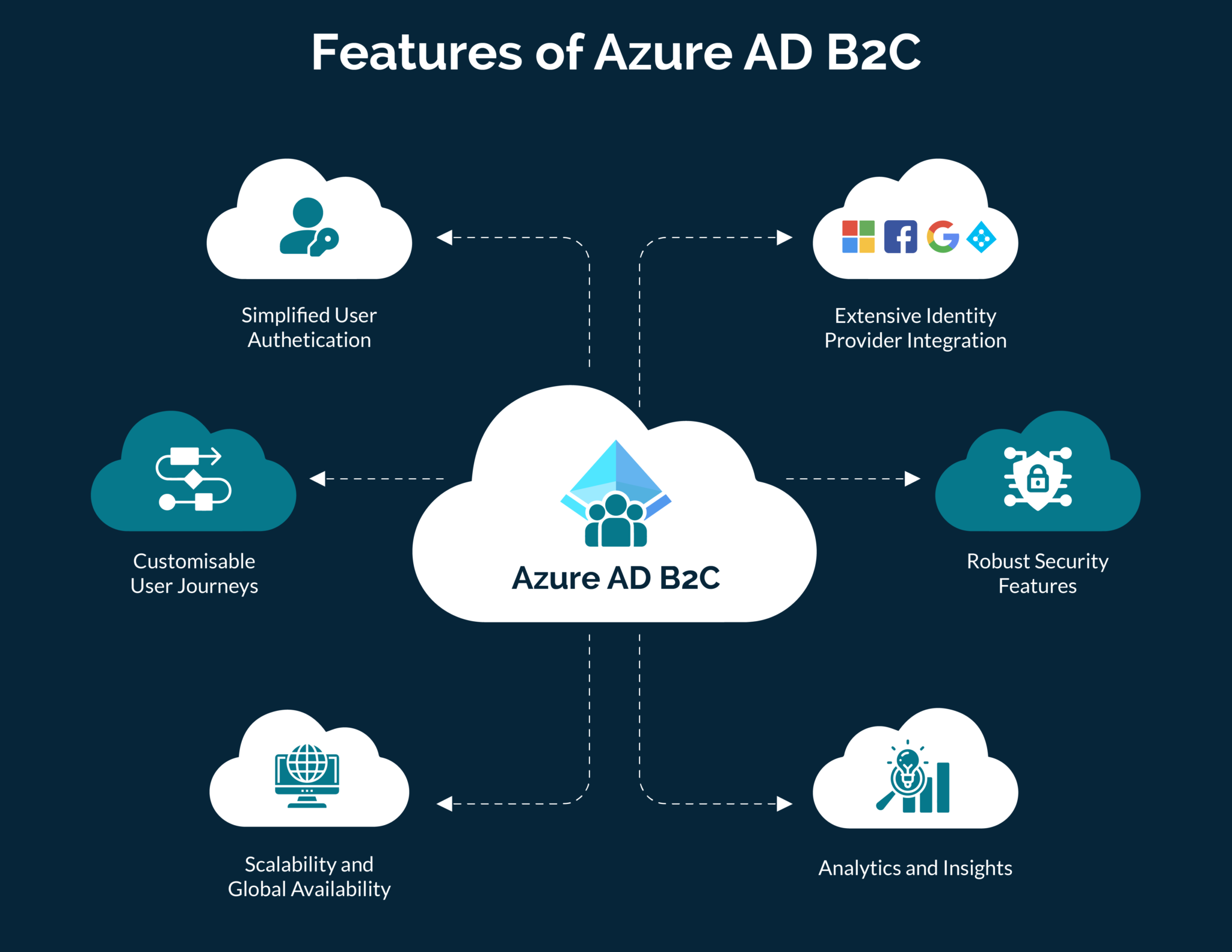
Azure AD B2C is a cloud-based customer identity and access management (CIAM) solution provided by Microsoft. It empowers businesses to deliver secure, personalised, and seamless experiences to their customers across various platforms and devices. By leveraging its capabilities, organisations can streamline customer journeys, strengthen security, and enhance scalability. Let’s dive into the key benefits it offers.
Features
Simplified User Authentication
Azure AD B2C offers a simplified user authentication process, allowing businesses to provide seamless and secure access to their applications and services. With Azure AD B2C, users can leverage a single set of credentials across multiple applications, eliminating the need for separate accounts. This streamlined approach (Single Sign-On) enhances user convenience and eliminates the frustration associated with remembering multiple usernames and passwords.
Scalability and Global Availability
As businesses expand and the number of users grows, scalability becomes a crucial factor in choosing an identity platform. Azure AD B2C is built on Microsoft Azure’s globally distributed cloud infrastructure, providing unmatched scalability and global availability. The service automatically scales based on demand, ensuring high performance and availability, regardless of the user’s location. This scalability feature allows organisations to handle increased traffic and deliver consistent experiences to users around the world.
Customisable User Journeys
Azure AD B2C enables businesses to create personalised and customisable user journeys tailored to their specific requirements. You have the flexibility to design and implement user flows, including user registration, password reset, and profile editing, to align with your brand and user experience goals. For more advanced scenarios, Identity Experience Framework (IEF) can be used to develop custom journeys and create even the most complex authentication flows. This customisation empowers you to deliver a seamless and engaging experience that resonates with your users, fostering loyalty and satisfaction.
Extensive Identity Provider Integration
Azure AD B2C seamlessly integrates with a wide range of identity providers, such as social media platforms (e.g., Facebook, Google, Microsoft accounts) and enterprise directories (e.g., Active Directory, LDAP). This integration capability simplifies the user authentication process, allowing users to sign in with their existing accounts. By leveraging popular identity providers, businesses can reduce friction and enhance the onboarding process, resulting in improved user acquisition and conversion rates.
Robust Security Features
Security is a paramount concern when managing user identities. Azure AD B2C offers a comprehensive set of security features to protect user identities and data. These include multi-factor authentication (MFA), password complexity policies, risk-based conditional access, and integration with Azure AD Identity Protection. With these robust security measures in place, businesses can significantly reduce the risk of unauthorised access and data breaches, ensuring the safety and trust of their users.
Analytics and Insights
Azure AD B2C provides valuable analytics and reporting capabilities, giving businesses deep insights into user behaviour, preferences, and trends. These insights enable data-driven decision-making, allowing organisations to optimise user experiences, identify areas for improvement, and enhance their marketing strategies. With access to user data, businesses can tailor their offerings to meet user needs, resulting in improved customer satisfaction and business growth.
Addressing Identity Platform Challenges
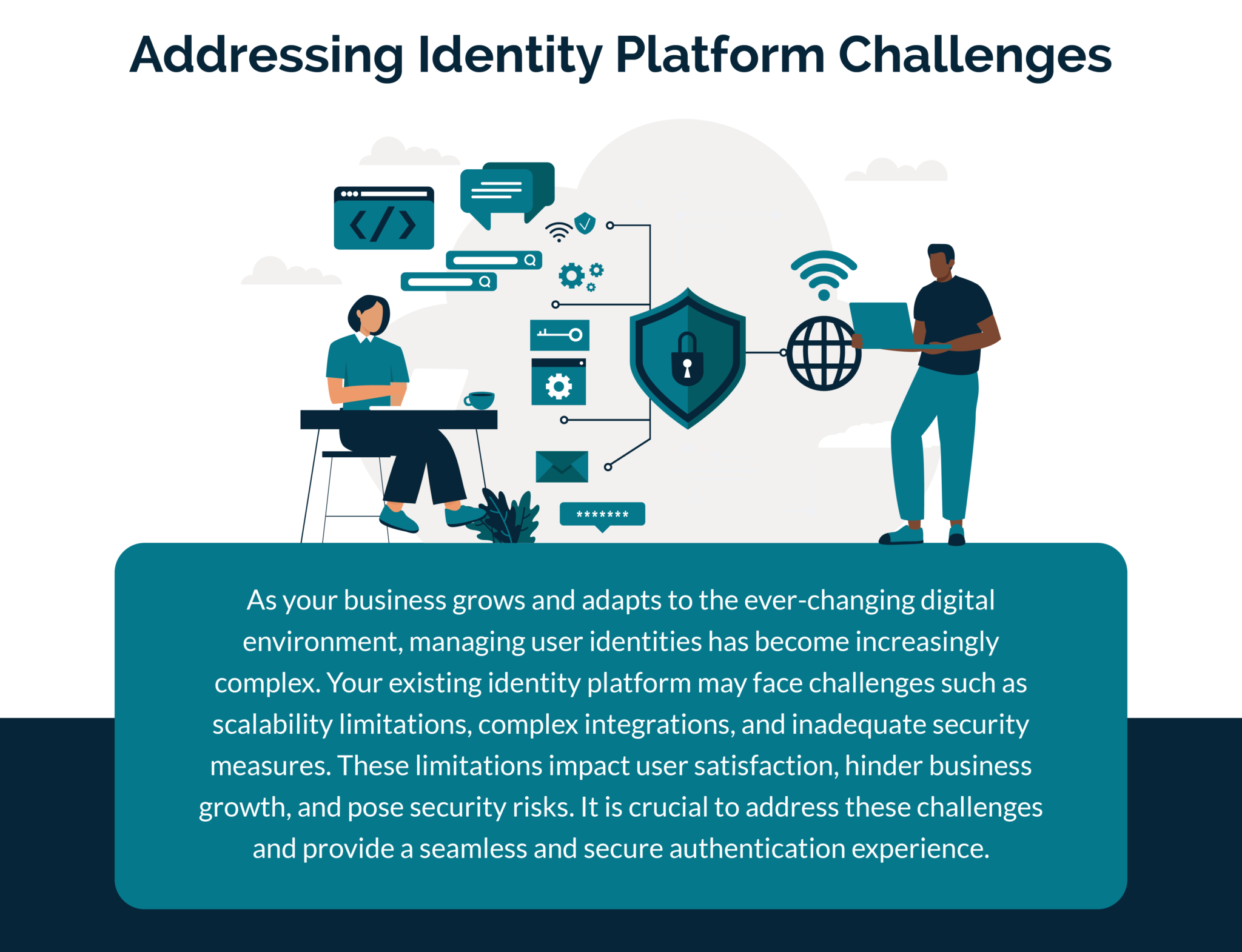
As your business grows and adapts to the ever-changing digital environment, managing user identities has become increasingly complex. Your existing identity platform may face challenges such as scalability limitations, complex integrations, and inadequate security measures. These limitations impact user satisfaction, hinder business growth, and pose security risks. It is crucial to address these challenges and provide a seamless and secure authentication experience.
Azure AD B2C Migration Plan
Transparity, a trusted technology consultancy and Microsoft partner, offers comprehensive assistance for migrating your company’s identity platform to Azure AD B2C. By leveraging our expertise and the powerful features of Azure AD B2C, we will enable your business to enhance user experiences, streamline identity management, and ensure robust security measures. To address identity challenges and facilitate a smooth transition, we offer a structured migration approach:
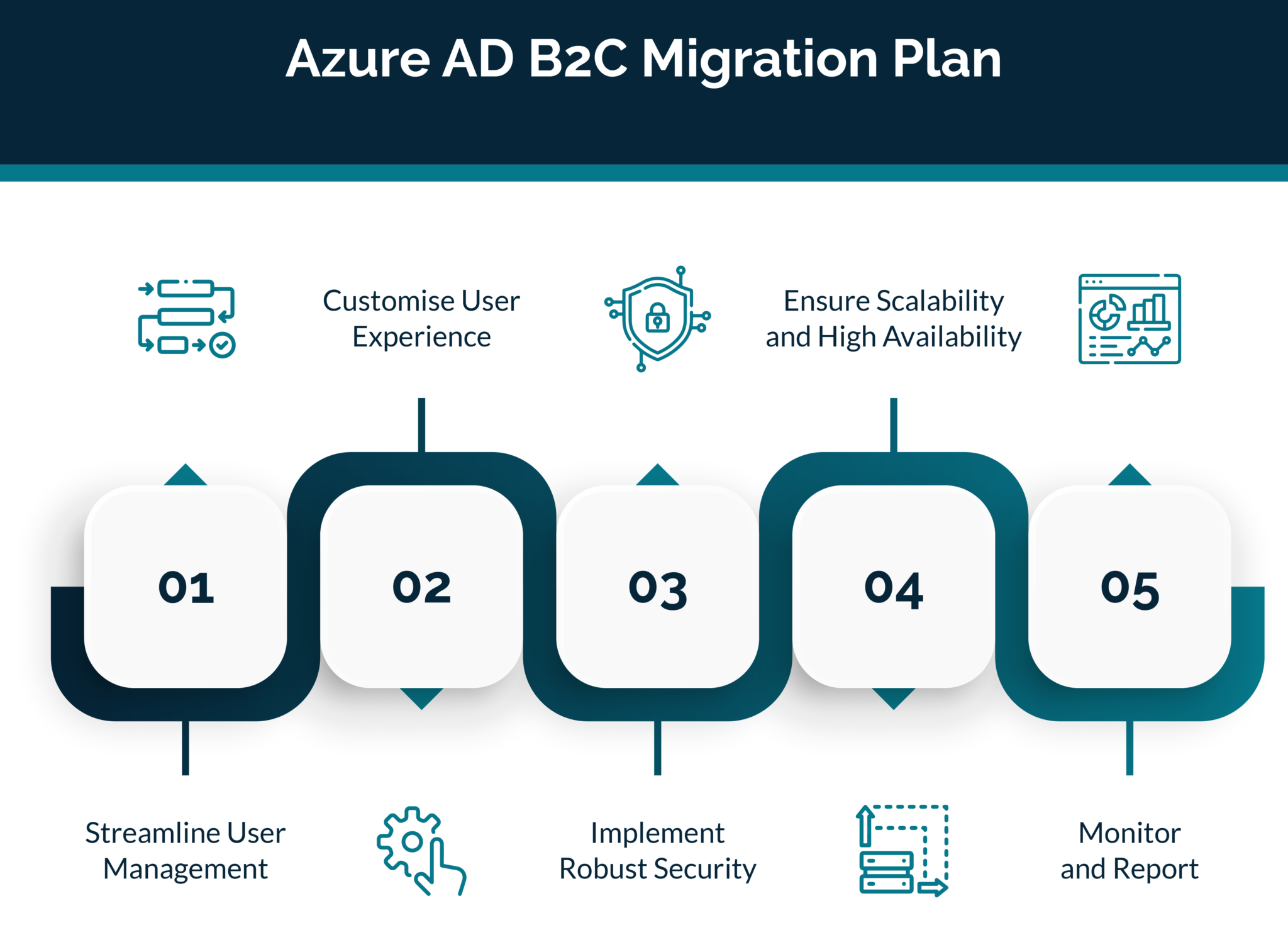
Streamline User Management
With Azure AD B2C, user management becomes simpler and more efficient. Transparity will assist in configuring Azure AD B2C to seamlessly integrate with your applications and existing identity providers. This will provide users with a unified and consistent authentication experience across platforms.
Customise User Journeys
Our experts will work closely with your team to design and implement tailored user journeys using Azure AD B2C’s customisation capabilities. This will enable you to create personalised experiences that align with your brand and meet the specific needs of your users.
Implement Robust Security
We will implement comprehensive security measures using Azure AD B2C, ensuring the protection of user identities and data. We will configure multi-factor authentication (MFA), risk-based conditional access policies, and password complexity policies to minimize the risk of unauthorised access and enhance compliance with industry regulations.
Ensure Scalability and High Availability
Azure AD B2C, built on Microsoft’s reliable Azure cloud infrastructure, guarantees scalability and high availability. Our team will handle the migration process seamlessly, ensuring minimal disruption to your business operations. Azure AD B2C’s auto-scaling capabilities will accommodate your growing user base and handle peak loads without compromising performance or user experience.
Monitor and Report
We will leverage Azure AD B2C’s analytics and reporting features to provide you with valuable insights into user behaviour, trends, and patterns. This data-driven approach will enable you to make informed decisions and optimize user experiences.
Conclusion
Migrating to Azure AD B2C as your identity platform offers numerous benefits for businesses looking to streamline their identity management processes. With its robustness, flexibility and customisation capabilities, Azure AD B2C empowers organisations to deliver exceptional user experiences while ensuring the highest levels of security. By embracing Azure AD B2C, businesses can enhance user satisfaction, drive engagement, and pave the way for growth in the digital world.
With extensive experience and expertise in technology consultancy, Transparity is well-equipped to guide your organisation through a successful migration journey. Our team of experts will work closely with you to understand your unique requirements, design a customised solution, and seamlessly transition your identity platform to Azure AD B2C. Trust in our proven track record and commitment to delivering high-quality results to make your transition to Azure AD B2C a seamless and successful one.