
In today’s digital age, web applications are the backbone of many businesses. From e-commerce platforms to service portals, the performance of these applications can significantly influence a company’s success. Web app performance testing is not just a technical requirement but a business necessity.
Web app performance testing is the process of evaluating how a web application performs under various workloads. It involves testing the app’s speed, responsiveness, and stability to ensure it can handle real-world scenarios effectively.
Web app performance testing helps to pinpoint and resolve the performance-related issues that might affect the user experience negatively.
A slow or unreliable web application can severely damage your brand’s reputation. Nowadays customers have high expectations for speed and efficiency. Failure to meet these expectations can lead to negative reviews, a decline in customer trust, and a tarnished brand image.
Underperforming web apps can have substantial impacts on your business. With the average cost of downtime estimated at $5,600 per minute, and this figure rising to an astonishing $400 billion annually for Global 2000 companies as mentioned in the Oxford Economics and Splunk study titled ‘The Hidden Costs of Downtime’, the repercussions are severe.
Ignoring web app performance testing can lead to substantial revenue loss. It can drive customers to competitors, reduce sales, and harm your bottom line.
Investing in web app performance testing is a proactive measure to safeguard your business’s financial health. Performance testing helps maintain your brand’s reputation by ensuring a high-quality user experience.
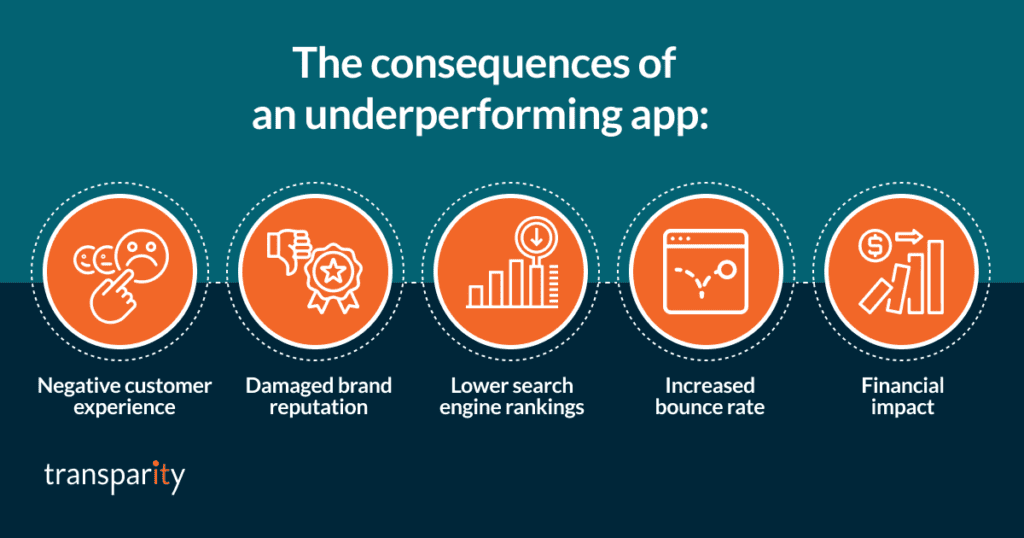
Here are some consequences of an underperforming app:
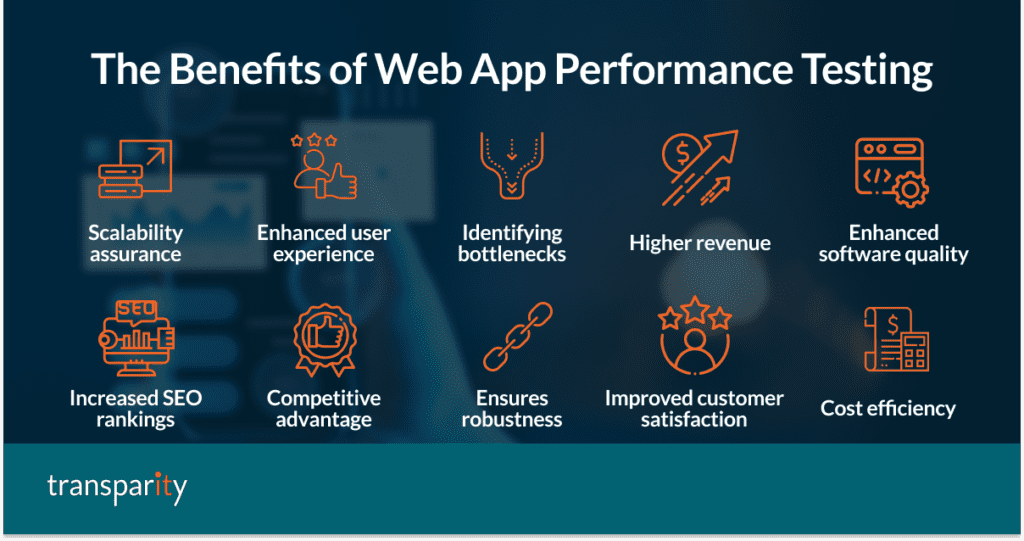
Web app performance testing is essential in today’s competitive environment. The benefits of having a highly performant application include:
Performance testing ensures that websites and applications can scale to handle increased traffic during peak events like Black Friday. By simulating high user loads, businesses can identify and address potential bottlenecks before they impact real users.
Performance testing helps identify and mitigate issues that slow down web pages or applications. Faster load times lead to a smoother user experience, reducing frustration and improving overall customer satisfaction.
Web app performance testing helps in identifying the areas of the application that are causing slowdowns or inefficiencies. By pinpointing bottlenecks, developers can focus on optimising the code and improving the overall system performance.
Improved performance leads to faster load times and smoother user interactions, which directly boosts user engagement and conversion rates. This increased efficiency can result in strong user engagement resulting in higher revenue.
Web app performance testing helps refine the software by identifying and addressing the issues early on. This process helps make the software more reliable and efficient.
Search engines like Google consider page load speed as a ranking factor. Faster websites are more likely to rank higher in search results, driving more organic traffic and increasing brand visibility.
In a competitive market, performance can be a differentiator. A faster, more efficient application can attract and retain more users compared to slower alternatives, leading to increased user retention and brand loyalty.
Web app performance testing can simulate various environments and usage scenarios, including peak load, continuous usage, and different network conditions. This ensures the application performs reliably across different situations and conditions.
A well-performing application or website enhances user satisfaction, encouraging repeat visits and fostering customer loyalty.
Web app performance testing helps organisations optimise resource utilisation by identifying and eliminating inefficiencies. This reduces the need for expensive hardware upgrades in on-premises environments and prevents unnecessary scaling of cloud resources. As a result, it can lower operational costs by minimising the need to upgrade to higher-tier services or provision more instances than necessary.
Timing is crucial when it comes to web app performance testing. Integrating this process effectively throughout your software development lifecycle can significantly enhance your web application’s success. Here’s a streamlined approach to strategically scheduling performance testing:
Regular web app performance testing throughout the development lifecycle helps ensure ongoing optimisation. Continuous testing allows for real-time identification of performance degradation, enabling timely interventions that maintain system efficiency and reliability.
By using tools like Azure Load Testing, performance testing can be seamlessly integrated into the CI/CD pipeline. By automating load tests with each build or deployment, Azure Load Testing helps teams identify performance issues early, even before the application reaches production. This means the issues can be caught and fixed early on, keeping your app robust and ensuring a better experience for everyone.
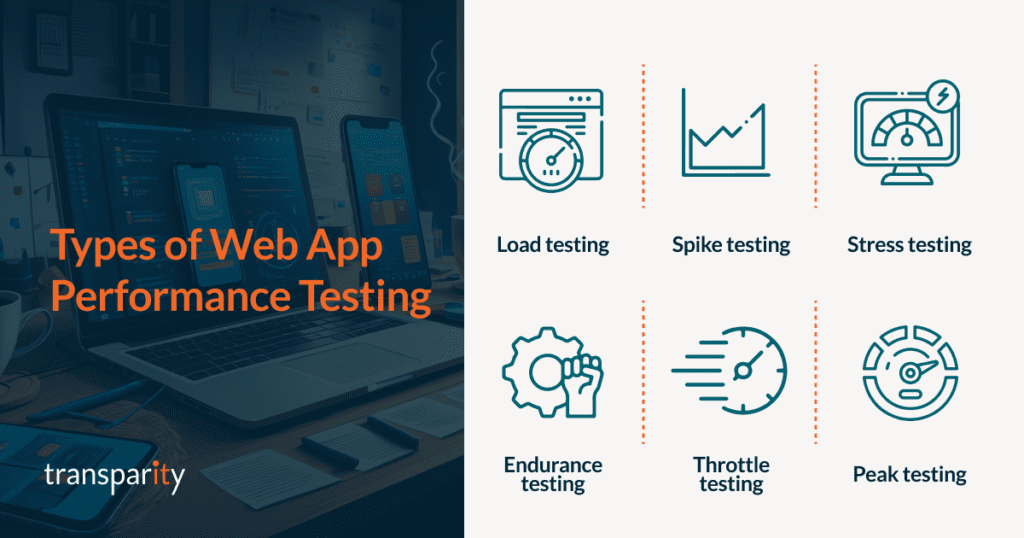
At Transparity, we offer a complete suite of app performance testing services designed to ensure your software performs optimally under various conditions. Each type of web app performance testing focuses on a different aspect of your application’s capabilities and limitations, providing a comprehensive understanding of its overall performance and quality. Our services include:
By leveraging our extensive expertise in web app performance testing, Transparity ensures that your software not only meets but exceeds performance expectations, leading to enhanced user satisfaction and overall success.
Contact us today to discuss how we can help you enhance your web app’s performance and ensure your business’s success in the digital age.