As we enter 2025, the rapid pace of technological advancements continues to reshape industries. Organisations are increasingly scrutinising their ageing, mission-critical bespoke applications. Many clients approach us with software that relies on unsupported or end-of-life components, leaving it vulnerable to cyberattacks and operational inefficiencies.
The experts in our Application Innovation practice expect this trend to accelerate. Here are our 2025 tech predictions for end-of-life apps:
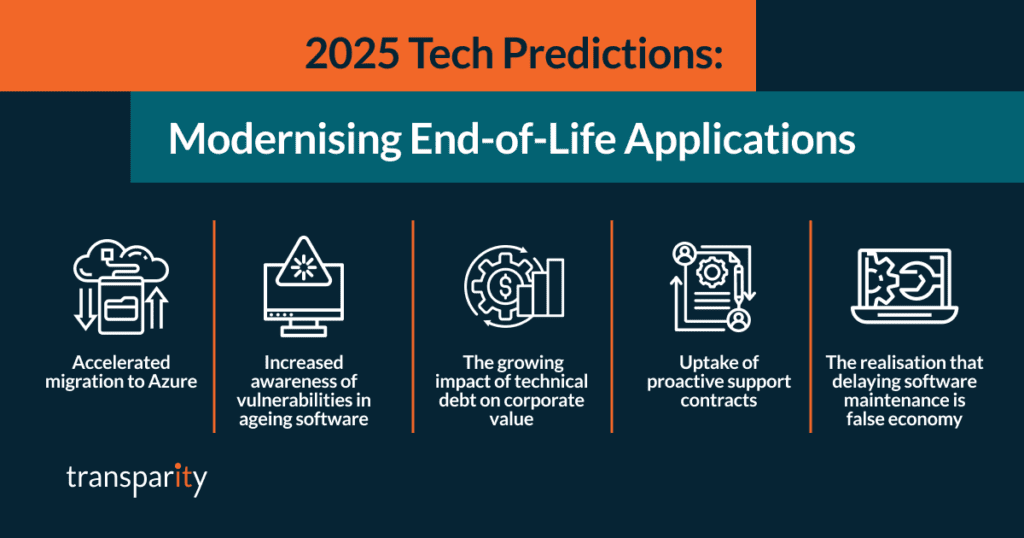 1. Accelerated Migration to Azure
In 2025, we predict an accelerated migration of legacy applications to Microsoft Azure, driven by the need for enhanced operational agility and robust security. Organisations will increasingly recognise the critical advantages of moving their bespoke applications to the cloud. The migration to Azure brings several substantial benefits:
As end-of-life software becomes a greater liability, organisations will turn to modern tools for vulnerability detection throughout the software development lifecycle.
In 2025, the heightened awareness of vulnerabilities in ageing software will drive organisations to prioritise security across their development processes. As legacy systems become more susceptible to cyber threats, businesses will adopt modern security tools to mitigate risks effectively. Additionally, threat modelling and attack surface analysis will become standard practices, helping businesses proactively identify and address potential security threats. This proactive approach to vulnerability detection will not only enhance the security of ageing software but also protect organisational assets and maintain stakeholder trust.
In 2025, technical debt will exert a profound influence on corporate value, increasingly shaping the landscape of mergers and acquisitions. Companies burdened with outdated, inefficient, or poorly maintained software will face considerable depreciation in their valuations due to higher maintenance costs, operational inefficiencies, and heightened security vulnerabilities. Such technical debt poses immediate financial burdens and complicates future integrations, escalating long-term risk profiles.

Conversely, organisations that proactively manage and modernise their software infrastructure will enhance their market appeal, drawing in investors and potential acquirers with the promise of streamlined operations, reduced maintenance expenditures, and robust security postures. As the financial implications of technical debt become more evident, businesses will place greater emphasis on maintaining and upgrading their technological assets to preserve and enhance corporate value.
In 2025, the adoption of proactive support contracts will be a defining trend for organisations aiming to sustain and enhance their operational efficiency. These contracts will become integral to IT strategies, offering structured and consistent maintenance schedules that pre-empt potential disruptions.
Organisations will increasingly invest in support contracts that encompass regular vulnerability assessments and routine updates, ensuring that systems remain secure, efficient, and aligned with the latest technological advancements. By proactively addressing issues before they escalate, businesses will not only avoid the high costs associated with emergency fixes but also maintain a competitive edge in the market.
This shift towards preventive maintenance will foster a culture of resilience and agility, positioning organisations to better navigate the evolving landscape of technology and cybersecurity.
2025 will see more organisations realise that delaying software maintenance is a costly mistake. Neglecting updates and enhancements increases technical debt, complicates future upgrades, and drives up costs. Regular maintenance ensures software remains:
The real takeaway from our 2025 tech predictions for ageing apps is that the modernisation of end-of-life applications isn’t just about maintaining functionality; it’s about driving innovation and creating a robust foundation for future growth. By embracing proactive maintenance, leveraging Azure’s capabilities, and prioritising security, organisations can ensure their applications are ready for the challenges of 2025 and beyond.
If you would like to see how the app innovation practice here at Transparity can help, get in touch.