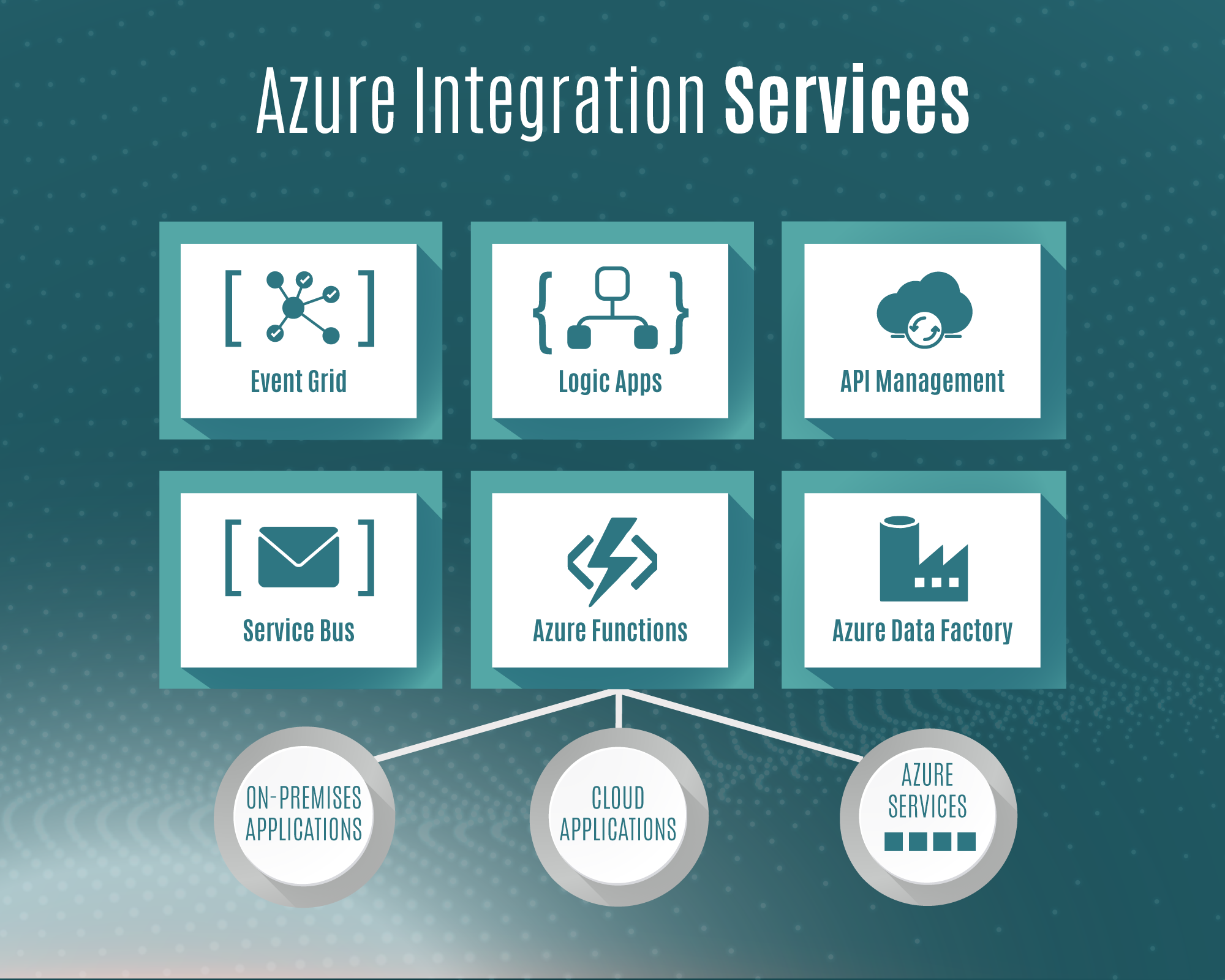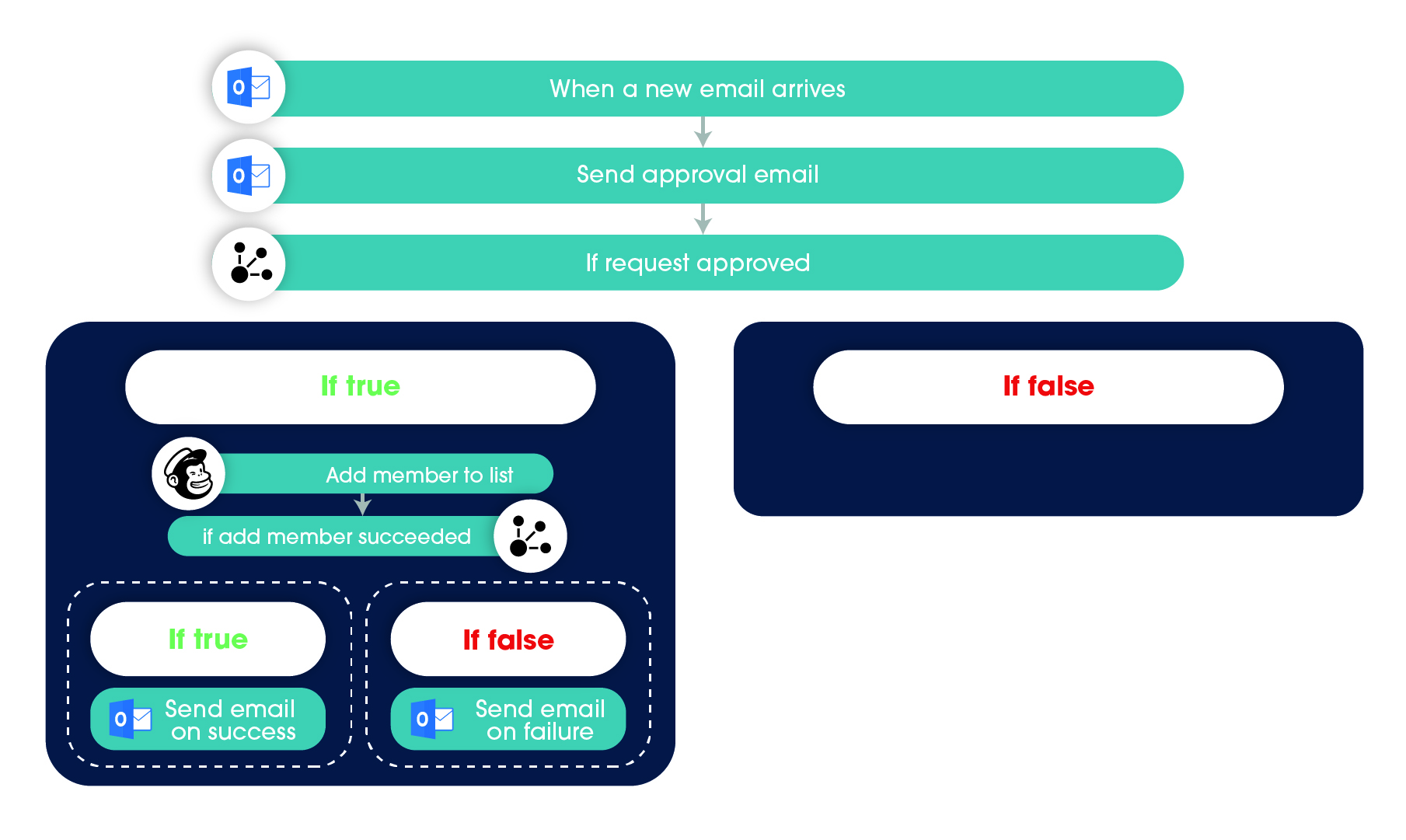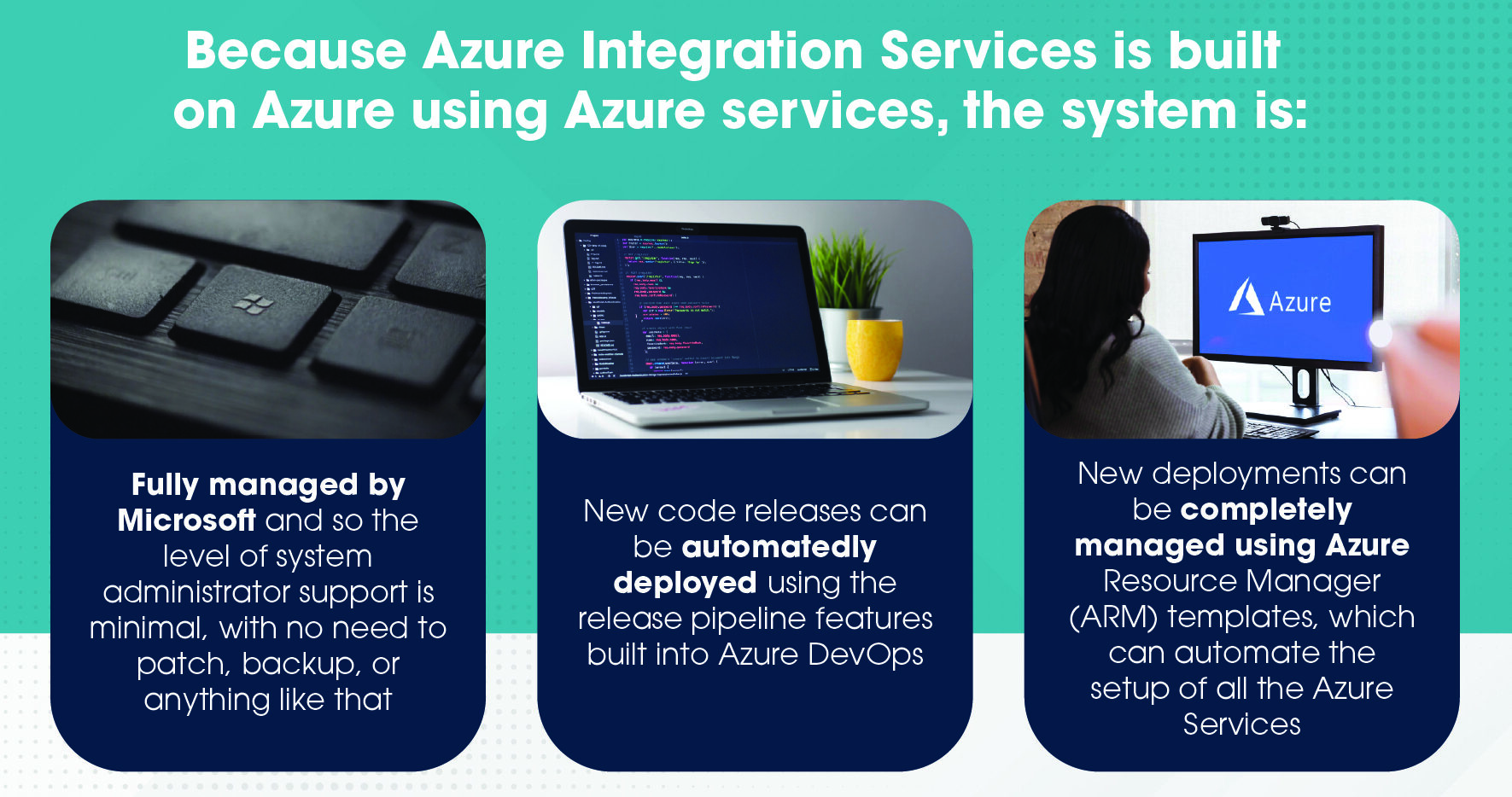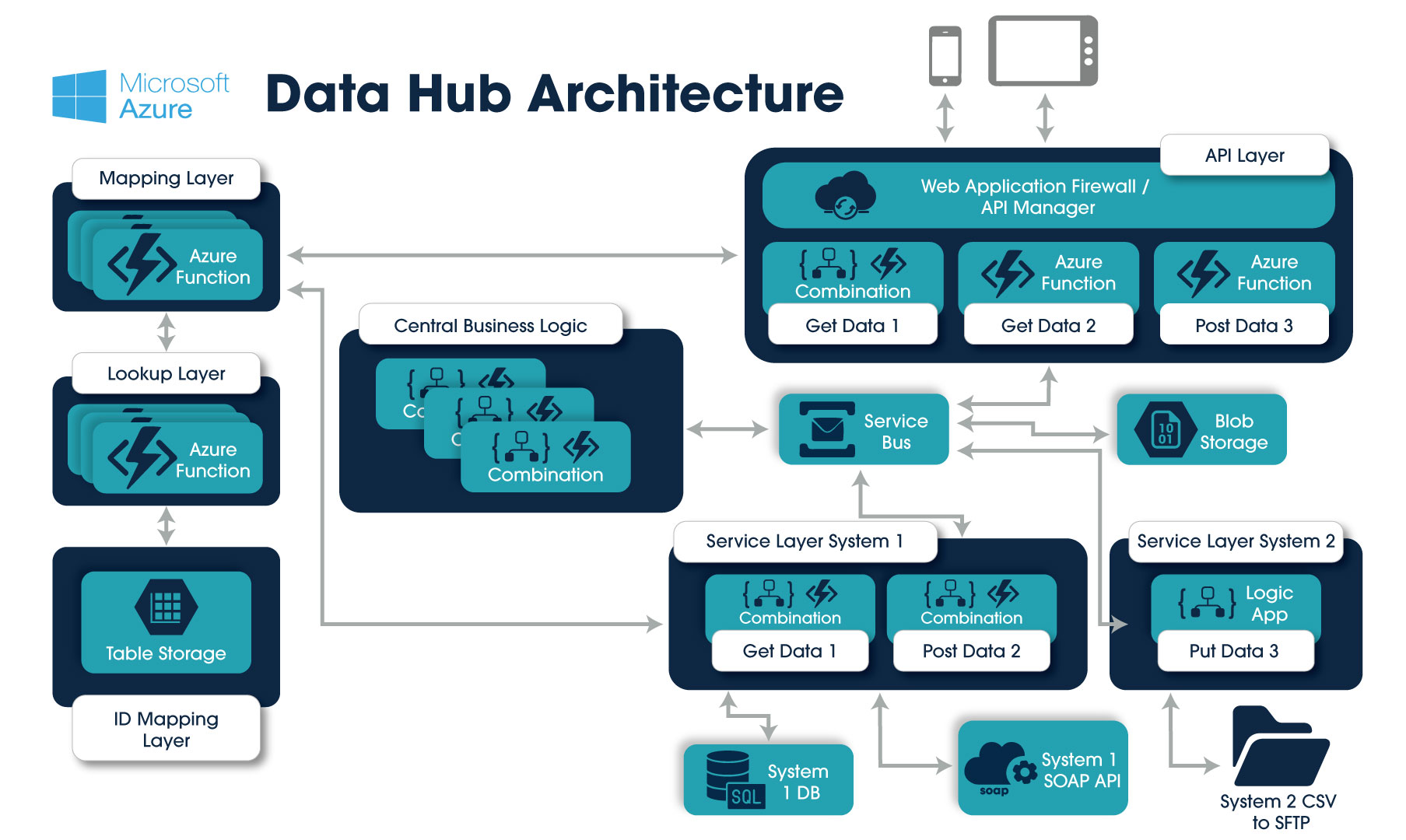
In this blog we take a look at what makes up Azure Integration Services, its history with BizTalk Server, our work in integration and the Ballard Chalmers’ Data Integration Hub Framework.
THE HISTORY OF AZURE INTEGRATION SERVICES
Azure Integration Services is the latest Microsoft Azure toolset for creating data integrations between IT systems. It replaces Biztalk Server which has existed since 2000.
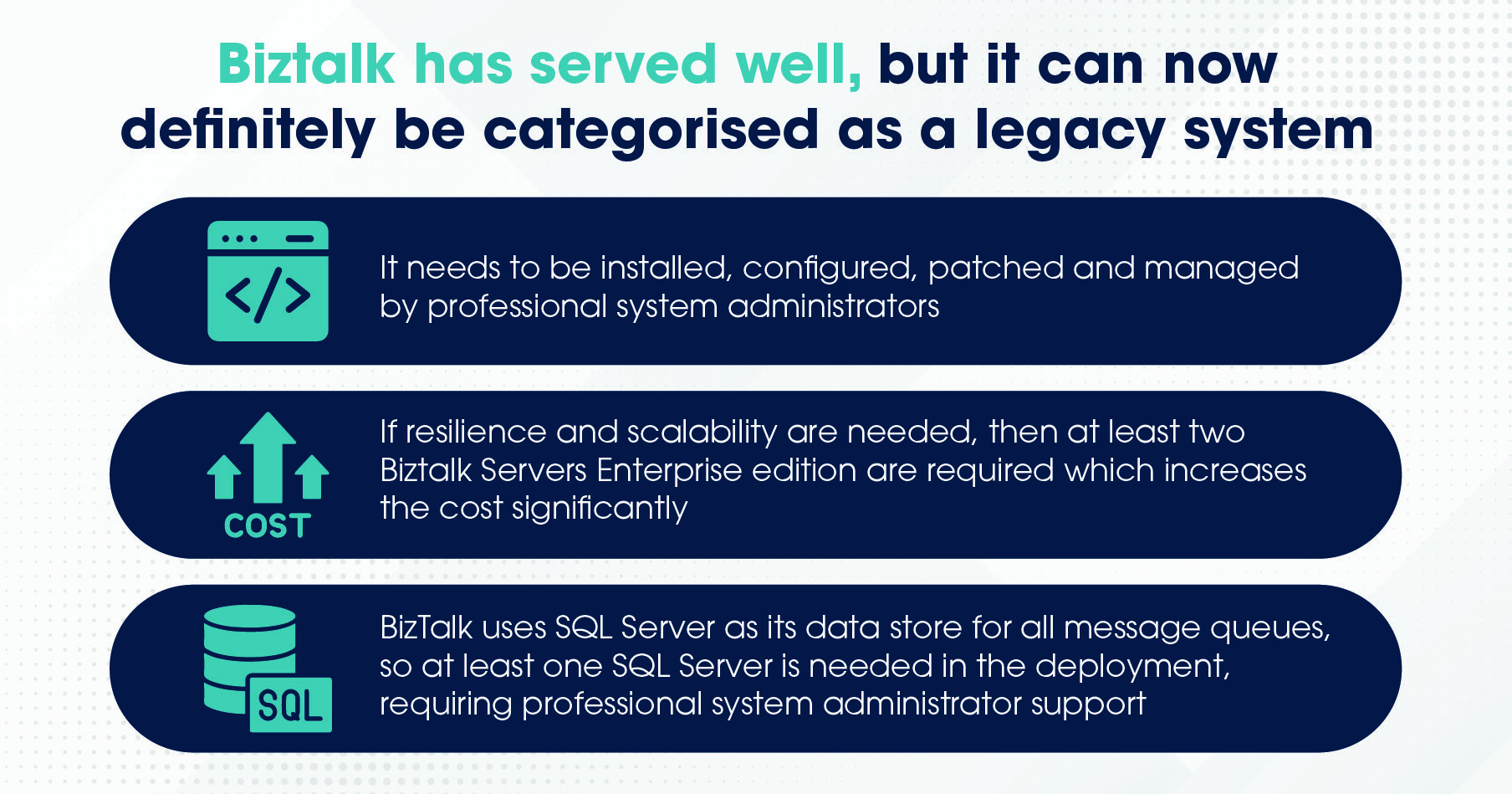
Biztalk has served well, but it can now definitely be categorised as a legacy system. It needs to be installed, configured, patched and managed by professional system administrators. If resilience and scalability are needed, then at least two Biztalk Servers are required and these both need to be Enterprise edition, all of which increases the cost significantly. Finally, BizTalk uses SQL Server as its data store for all message queues and so at least one SQL Server needs to be involved in the deployment and that requires professional system administrator support as well.
Notwithstanding all that; Biztalk does have all the features needed for integrating enterprise systems including:
- Adaptors for just about every data source including: FTP, HTTP, SQL and systems such as Oracle, SAP and EDI including AS2, X12 and Edifact
- Schema management, and mapping
- Message flow orchestration and transaction management
Microsoft briefly toyed with producing a cloud services version of BizTalk called BizTalk Services, but this had greatly reduced functionality and had overlapping functionality with the new and more flexible cloud services already in Azure. So, BizTalk Services was eventually dropped in favour of what is now called Azure Integration Services.
WHAT IS AZURE INTEGRATION SERVICES
Azure Integration Services is not a new Azure service but instead is a collection of other Azure services. This makes a lot of sense, why try and produce a new service that contains functionality that already exists in other services, just add new functionality where needed and take advantage of the whole of Azure for everything else.